

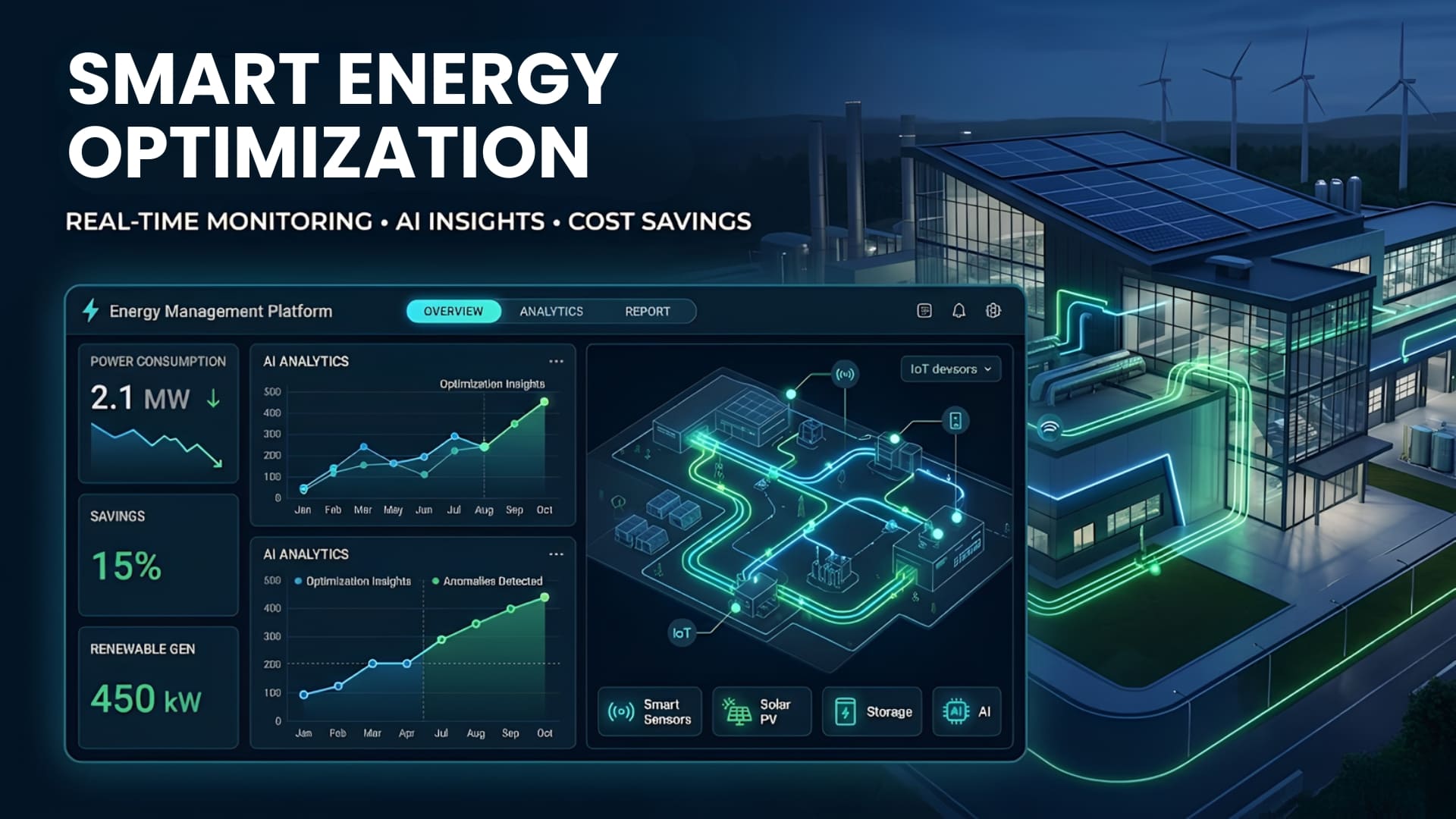
Rising energy costs and inefficient consumption are major challenges for industries today. Many organizations lack real-time visibility into their energy usage, leading to unnecessary waste and higher operational expenses. According to the International Energy Agency (IEA), improving energy efficiency could reduce global energy demand by over 30%. This is where an Energy Management Platform becomes essential.
An advanced Energy Management Platform helps businesses monitor, analyze, and optimize energy usage in real time, driving both cost savings and sustainability.
Key challenges businesses face:
- Lack of real-time energy data and insights
- High energy wastage and operational costs
- Difficulty in meeting sustainability goals
- Limited control over distributed energy systems
By addressing these gaps, this solution enables smarter decisions, improved efficiency, and long-term energy optimization.
What is an Energy Management Platform?
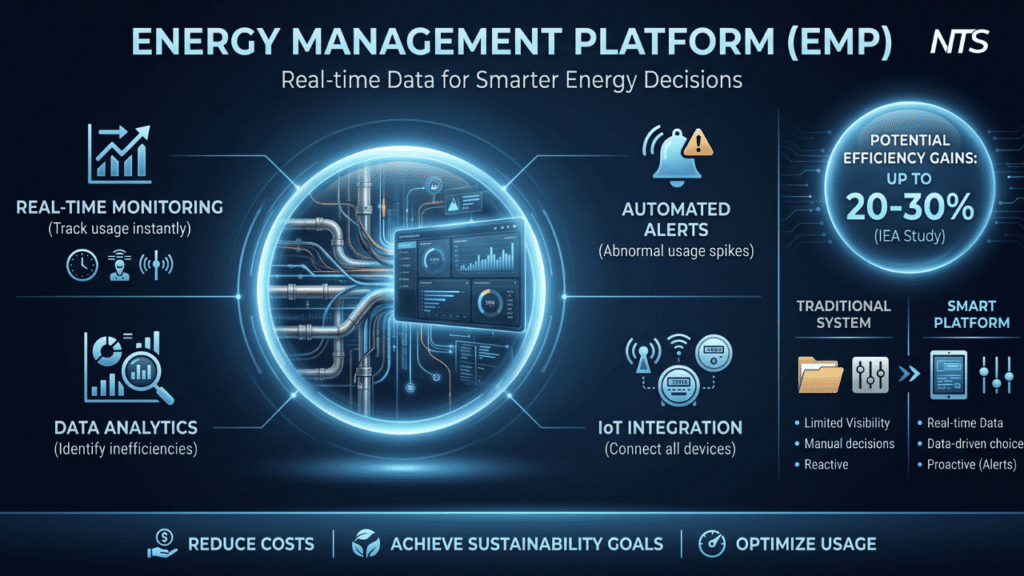
An Energy Management Platform (EMP) helps businesses monitor, control, and optimize energy usage in real time. Instead of guessing where energy gets wasted, companies use data-driven insights to make smarter decisions. According to the International Energy Agency (IEA), industries can improve energy efficiency by up to 20–30% with proper monitoring and optimization systems.
Think of it like a smart dashboard for energy. For example, a manufacturing plant can track machine-level consumption and instantly identify which equipment uses excess power.
Key Functions of the System:
- Real-time energy monitoring across devices and locations
- Data analytics to identify inefficiencies
- Automated alerts for abnormal energy usage
- Integration with IoT sensors and smart meters
Example:
A commercial building uses an EMP to track HVAC energy usage. When consumption spikes, the system alerts the facility manager, who adjusts settings and reduces costs immediately.
Energy Monitoring vs Traditional Systems
| Feature | Traditional System | Smart Energy Platform |
| Data Visibility | Limited | Real-time & detailed |
| Decision Making | Manual | Data-driven |
| Automation | None | Smart alerts & controls |
| Efficiency Improvement | Low | High (20–30% potential) |
This solution not only tracks usage but also turns data into actionable insights, helping businesses reduce costs and achieve sustainability goals efficiently.
Key Features of an Energy Management Platform
An effective Key Features of an Energy Management Platform goes beyond basic monitoring. It gives you real control over how your business consumes energy. Let’s break down the key features that make it powerful and practical.
Real-Time Energy Monitoring
You can track usage across machines, buildings, or departments instantly.
Example: A factory manager spots a sudden spike in machine power usage and takes immediate action to prevent waste.
Data Analytics & Insights
The system analyzes consumption patterns and highlights inefficiencies.
- Shows which equipment consumes the most energy
- Identifies peak usage hours
Automated Alerts & Notifications
You receive instant alerts when usage crosses a set limit.
Example: A commercial building gets notified when HVAC systems consume excess power during non-working hours.
IoT Integration
The platform connects with smart meters, sensors, and IoT devices.
This ensures accurate and continuous data collection.
Remote Access & Control
You can monitor and control operations from anywhere.
Example: Facility managers adjust lighting or cooling remotely to save energy.
Predictive Maintenance
The system predicts equipment issues based on usage patterns.
This helps prevent breakdowns and reduces maintenance costs.
These features work together to give businesses better visibility, control, and efficiency-turning data into actionable decisions.
Benefits of Using an Energy Management Platform
An Energy Management Platform gives businesses full control over energy usage. Instead of reacting to high bills, you can take proactive steps to reduce costs and improve efficiency.
Reduced Energy Costs
You identify waste quickly and take action.
Example: A factory reduces electricity bills by adjusting machine usage during peak hours.
Improved Energy Efficiency
You track consumption patterns and optimize operations.
- Shift heavy loads to off-peak times
- Balance usage across systems
Real-Time Decision Making
You access live data and make instant decisions.
Example: A facility manager reduces lighting or cooling during low occupancy hours.
Sustainability & Compliance
You monitor carbon footprint and meet environmental goals.
This helps companies align with ESG and sustainability standards.
Better Equipment Performance
You detect abnormal usage and fix issues early.
Example: A sudden spike alerts you about a faulty machine before it fails.
Centralized Control
You manage multiple locations from a single dashboard.
This is useful for businesses with distributed operations.
By using this system, businesses move from guesswork to data-driven control, leading to smarter operations and long-term savings.
Industries That Use Energy Management Platform
Many industries rely on smart energy solutions to control costs, improve efficiency, and meet sustainability goals. Any business with high energy consumption can benefit from these systems.
Manufacturing Industry
Factories use advanced monitoring systems to track machine-level energy usage and reduce waste.
Example: A production unit tracks consumption of each machine and identifies inefficient equipment, cutting unnecessary costs.
Commercial Buildings
Offices, malls, and hotels use these platforms to manage lighting, HVAC, and power systems.
Example: A shopping mall reduces electricity usage by adjusting air conditioning during low footfall hours.
Healthcare Facilities
Hospitals require continuous power for critical equipment. These systems help ensure reliability and efficiency.
Example: A hospital monitors energy usage in operation theaters and reduces wastage without affecting performance.
Data Centers
Data centers consume massive energy for servers and cooling systems.
These solutions help optimize cooling and prevent energy overload.
Smart Cities & Infrastructure
Cities use intelligent platforms to manage street lighting, water systems, and public utilities.
Example: Smart streetlights automatically adjust brightness based on traffic, saving energy.
Educational Institutions
Universities and campuses monitor multiple buildings from a centralized dashboard, improving control and efficiency.
By using this technology, industries gain better visibility, reduce operational costs, and move toward smarter, more sustainable operations.
Energy Management Platform vs Traditional Energy Systems
Many businesses still rely on traditional energy systems, but these approaches offer limited visibility and control. An Energy Management Platform changes this by bringing real-time data by bringing real-time data and smarter decision-making into daily operations.
Traditional Energy Systems
Traditional setups depend on manual monitoring and monthly billing reports. You only see total consumption, not where or how energy gets used.
- You react after receiving high electricity bills
- You lack detailed insights into equipment performance
- You depend on manual checks and reports
Example: A factory reviews its monthly electricity bill but cannot identify which machine caused the spike.
Smart Energy System
An Energy Management Platform provides real-time control and detailed insights across all operations.
- You track usage at machine or department level
- You receive instant alerts for abnormal consumption
- You use data to optimize performance and reduce costs
Example: A factory monitors each machine in real time. When one unit consumes extra power, the system alerts the team, and they fix the issue immediately.
Key Differences
Visibility:
- Traditional → Limited data
- Modern system → Real-time detailed insights
Decision Making:
- Traditional → Reactive
- Modern system → Proactive and data-driven
Efficiency:
- Traditional → Low improvement
- Modern system → High optimization potential
This approach transforms energy usage from guesswork into precise, actionable control.
How to Choose the Right Energy Management Platform
Choosing the right system can directly impact your cost savings and operational efficiency. You need a solution that fits your business size, energy usage, and long-term goals.
Key Factors to Consider
Scalability
Choose a platform that grows with your business.
Example: A manufacturing company expanding to multiple plants needs a system that can handle multiple locations.
Real-Time Monitoring Capabilities
Look for solutions that provide instant data.
This helps you take quick action when usage spikes.
Integration with Existing Systems
Ensure the platform connects with your current equipment, IoT devices, or ERP systems.
Example: A factory integrates smart meters and production machines for better insights.
User-Friendly Dashboard
Select a system with simple and clear dashboards.
Your team should understand data without technical complexity.
Advanced Analytics & Reporting
Choose a solution that provides actionable insights, not just raw data.
It should highlight inefficiencies and suggest improvements.
Cost vs ROI
Don’t focus only on price. Evaluate how much savings the system can generate over time.
Practical Tip
Start with a pilot project. Test the solution in one department before full implementation.
By choosing the right system, you ensure better control, faster decision-making, and long-term energy optimization.
Role of IoT and AI in Energy Management Platform
IoT and AI power modern energy systems by turning raw data into real-time insights and smart actions. Instead of manual tracking, businesses can rely on automated monitoring and intelligent decision-making.
Role of IoT (Internet of Things)
IoT devices collect real-time data from machines, meters, and connected systems. They act as the “eyes and ears” of the solution.
- Smart sensors track usage across equipment
- Smart meters send continuous consumption data
- Connected devices provide location-wise insights
Example:
A factory installs IoT sensors on machines. The system shows which equipment consumes the most energy at any moment.
Role of AI (Artificial Intelligence)
AI analyzes the data collected from IoT devices and converts it into actionable insights. It helps businesses predict, optimize, and automate operations.
- Identifies consumption patterns
- Predicts equipment failures based on trends
- Recommends energy-saving actions
- Automates system responses
Combined Impact of IoT + AI
- Real-time monitoring with intelligent insights
- Faster, data-driven decision-making
- Reduced energy waste and operational costs
By combining IoT and AI, these solutions move beyond simple tracking they actively help businesses optimize usage and improve overall efficiency.
Future Trends in Energy Management Platforms
Modern Energy Management Platforms continue to evolve rapidly as businesses demand smarter and more efficient solutions. New technologies are transforming how companies monitor and optimize usage.
AI-Driven Automation
AI will play a bigger role in automating decisions.
- Systems automatically adjust usage based on real-time demand
- AI suggests optimization strategies without manual input
Example:
A smart building reduces cooling automatically when occupancy drops, saving energy instantly.
Integration with Renewable Energy
Solutions are increasingly integrating with solar, wind, and other renewable sources.
- Businesses can track generation and consumption in real time
- Systems balance grid and renewable energy usage efficiently
Example:
A factory uses solar panels to switch between grid power and renewable energy based on availability.
Smart Grid Connectivity
Modern platforms connect directly with smart grids.
- Enables real-time energy distribution and demand response
- Helps reduce costs during peak pricing hours
Advanced IoT Expansion
More IoT devices provide deeper insights across operations.
- Sensors track usage at a micro level (machine, room, device)
Sustainability & ESG Tracking
Businesses now focus on carbon tracking and reporting.
- Companies monitor emissions and achieve sustainability goals more effectively
These trends show that modern solutions are moving beyond simple monitoring to fully automated, intelligent systems that drive efficiency and sustainability.
Why Choose Niraltek Energy Management Platform
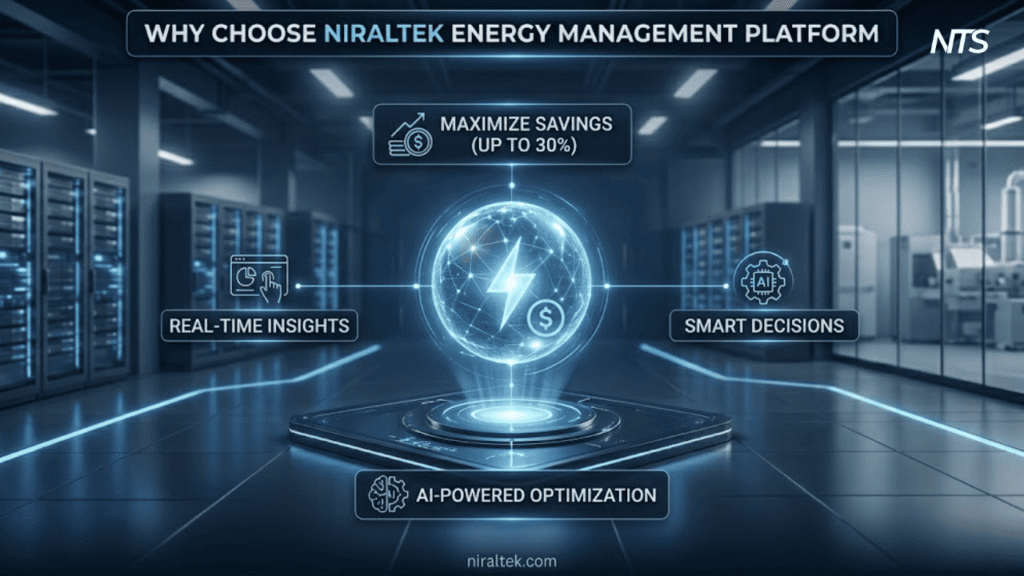
Businesses need more than basic monitoring-they need actionable insights and measurable results. Niraltek delivers exactly that by combining IoT, AI, and real-time analytics to optimize energy usage.
According to industry studies, companies can reduce energy costs by 15–30% with advanced monitoring systems. Niraltek focuses on delivering these outcomes through practical and scalable solutions.
Key Advantages of Niraltek
- Real-time monitoring across multiple locations and devices
- AI-driven insights for faster decision-making
- Easy integration with existing systems and IoT devices
- Scalable solutions for industries, buildings, and utilities
- User-friendly dashboards for quick analysis
Example Use Case
A manufacturing unit uses Niraltek’s solution to monitor machine-level energy consumption. The system identifies inefficiencies, enabling the team to reduce waste and lower operational costs significantly.
Niraltek vs Traditional Platforms
| Feature | Traditional Platforms | Niraltek Solution |
| Data Visibility | Limited | Real-time & detailed |
| Insights | Basic reports | AI-driven recommendations |
| Scalability | Limited | Multi-location support |
| Integration | Complex | Seamless IoT integration |
| Cost Optimization | Moderate | High (15–30% potential) |
By choosing Niraltek, businesses gain a smart, future-ready solution that turns energy data into real savings and sustainable growth.
Ready to optimize your energy usage and reduce operational costs? Explore how Niraltek’s smart solution can deliver real-time insights and measurable savings-visit niraltek.com today.
Conclusion
An Energy Management Platform is no longer just an optional tool no longer just an optional tool-it has become essential for businesses aiming to reduce costs, improve efficiency, and achieve sustainability goals. With real-time insights, predictive analytics, and intelligent automation, organizations can move from reactive decisions to proactive energy optimization.
From manufacturing plants to commercial buildings, companies that adopt modern systems gain better visibility, stronger control, and measurable results. As energy demands continue to rise, businesses that invest in intelligent solutions will stay ahead in both performance and sustainability.
Ready to take control of your energy usage and drive real savings? Explore how Niraltek’s smart platform can transform your operations-visit niraltek.com today.
FAQ
1. What is an Energy Management Platform?
An energy management platform is a system that helps businesses monitor, analyze, and optimize energy usage in real time to reduce costs and improve efficiency.
2. How does an Energy Management Platform work?
An Energy Management Platform collects real-time data and analyzes energy usage to optimize efficiency and reduce costs.
3. What are the benefits of using this solution?
Businesses can reduce costs, improve efficiency, monitor performance in real time, and achieve sustainability goals.
4. Who should use this platform?
Industries, commercial buildings, hospitals, data centers, and any organization with high energy consumption can benefit from it.
5. How does it reduce costs?
It identifies energy waste, highlights inefficiencies, and enables better control over usage, leading to lower operational expenses.
6. What is the difference between monitoring and management?
Monitoring tracks usage, while a smart system analyzes data and helps optimize consumption.
7. Can small businesses use this solution?
Yes, many platforms offer scalable options suitable for both small and large businesses.
8. How does IoT help in these systems?
IoT devices collect real-time data from equipment and systems, allowing accurate monitoring and better decision-making.