

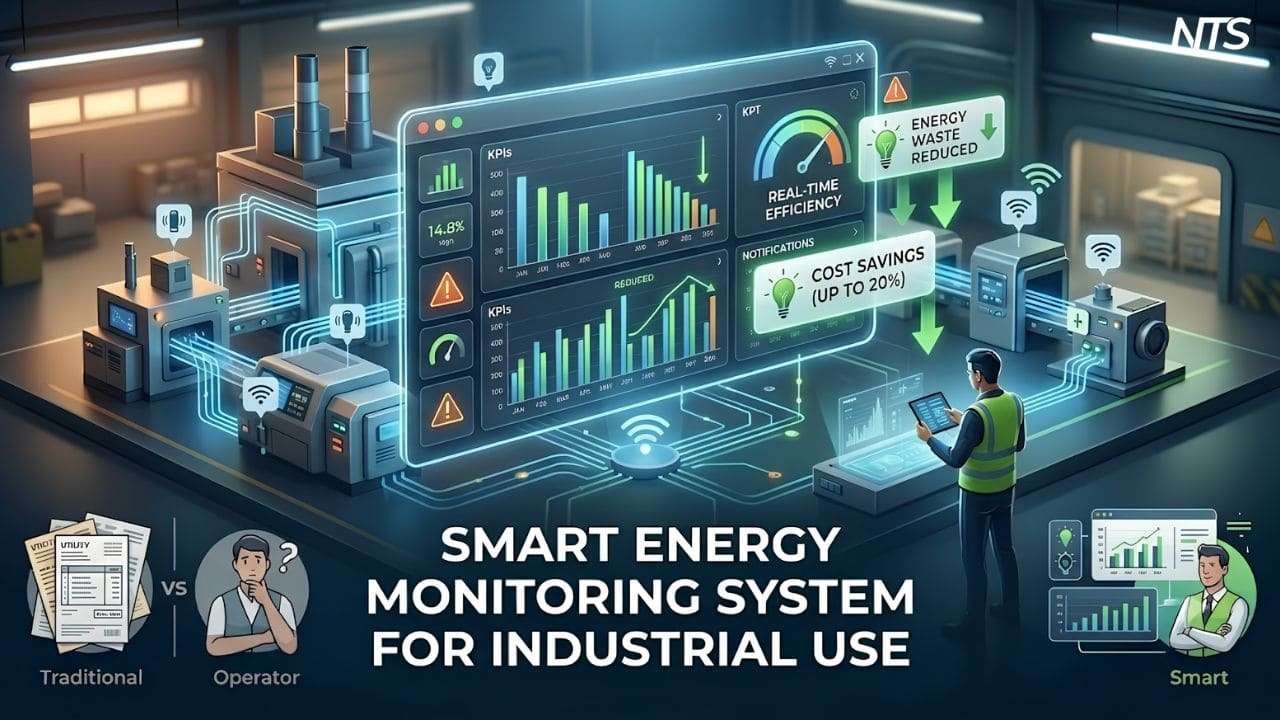
Rising energy costs and lack of real-time visibility are major challenges for modern industries. According to the International Energy Agency (IEA), energy efficiency improvements could reduce global energy demand by over 30%, while the U.S. Department of Energy reports that monitoring systems can lower energy costs by up to 20%. Despite this, many businesses still rely on outdated methods, leading to inefficiencies and waste.
A smart energy solution solves this by providing real-time insights, enabling data-driven decisions, and improving operational efficiency.
Key challenges:
- Limited visibility into energy usage
- High operational and electricity costs
- Difficulty identifying energy waste
- Inefficient resource management
What is a Smart Energy Monitoring System?
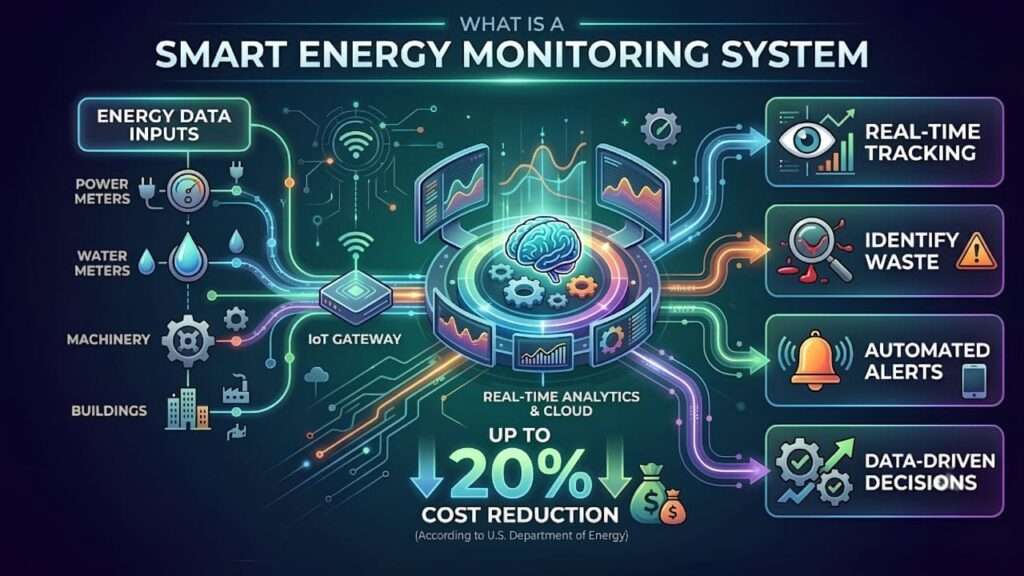
This system helps businesses track energy, analyze, and optimize energy usage in real time using IoT technology. Instead of relying on monthly bills, you get live insights into how energy is consumed across machines, buildings, or entire facilities. According to the U.S. Department of Energy, real-time energy monitoring can reduce energy costs by up to 20%.
Key functions include:
- Real-time tracking of electricity, water, and utilities
- Identifying energy waste and inefficiencies
- Automated alerts for unusual consumption
- Data-driven decision-making
Example: A manufacturing unit detects a sudden spike in electricity usage and immediately adjusts operations to avoid extra costs.
| Component | Function |
| Sensors | Collect energy usage data |
| IoT Gateway | Transfers data to cloud |
| Dashboard | Displays real-time insights |
| Analytics Tools | Identify patterns and savings |
This system converts raw data into actionable insights, helping businesses improve efficiency and reduce operational costs.
How Smart Energy Monitoring System Works in Industries
A Smart Energy Monitoring System works by collecting real-time data from machines, equipment, and utilities, then converting it into useful insights for better decision-making. It uses IoT sensors, gateways, and cloud platforms to monitor energy usage continuously across industrial operations.
Here’s how it works step by step:
- Sensors capture real-time energy data from machines and systems
- IoT gateways transmit data to a central platform
- Cloud software analyzes usage patterns and detects inefficiencies
- Dashboards display insights for quick decision-making
- Alerts notify teams when energy usage exceeds limits
Example: In a manufacturing plant, sensors track electricity consumption for each machine. If one machine uses more energy than expected, the system sends an alert, allowing the team to fix the issue immediately and avoid extra costs.
This process helps industries move from reactive control to proactive, data-driven energy management.
Key Components of Smart Energy Monitoring System
A Smart Energy Monitoring System relies on multiple components that work together to deliver real-time insights and control. Each component plays a key role in collecting, transmitting, and analyzing energy data across industrial operations.
Key components include:
- Sensors and Smart Meters: These devices measure energy consumption at machine or building level.
- IoT Gateway: It collects data from sensors and sends it to the cloud securely.
- Cloud Platform: It stores and processes large amounts of energy data in real time.
- Dashboard and Analytics: It displays data in simple visuals and highlights inefficiencies.
- Alerts and Notifications: The system sends instant alerts when energy usage exceeds limits.
Together, these components help industries monitor, control, and optimize energy efficiently.
Key Benefits of Energy Monitoring
A Smart Energy Monitoring System gives industries better control over energy usage and helps reduce unnecessary costs. Instead of guessing consumption, you track everything in real time and make smarter decisions quickly.
Key benefits include:
- Reduced Energy Costs: You identify waste and take action immediately.
- Improved Efficiency: You monitor machine-level usage and optimize performance.
- Real-Time Decision Making: You respond instantly to energy spikes or issues.
- Predictive Maintenance: You detect unusual patterns before equipment fails.
- Sustainability Goals: You reduce carbon footprint and meet ESG targets.
By using this system, industries move from reactive management to proactive, data-driven energy control.
Looking for a Complete Smart Energy Monitoring Solution?
Understanding the benefits of energy monitoring is the first step. The next step is implementing a reliable solution that delivers real-time visibility, intelligent analytics, and automated alerts.
Explore Niraltek’s Smart Energy Management Solution to monitor energy consumption, reduce operational costs, improve energy efficiency, and gain real-time insights across your industrial facilities.
Applications of Smart Energy Monitoring System
A Smart Energy Monitoring System helps industries control energy usage, reduce waste, and improve efficiency through real-time insights. Businesses use it across different sectors to make faster, data-driven decisions.
Common applications include:
- Manufacturing Plants: You monitor machine-level energy usage and optimize production.
- Commercial Buildings: You control lighting, HVAC, and utilities based on occupancy.
- Data Centers: You manage high energy demand for servers and cooling systems efficiently.
- Healthcare Facilities: You ensure stable energy for critical equipment like ICU systems.
- Smart Cities: You automate street lighting and utilities based on real-time demand.
These applications help industries move from manual monitoring to smart, efficient energy management.
Key Features of Energy Monitoring Systems
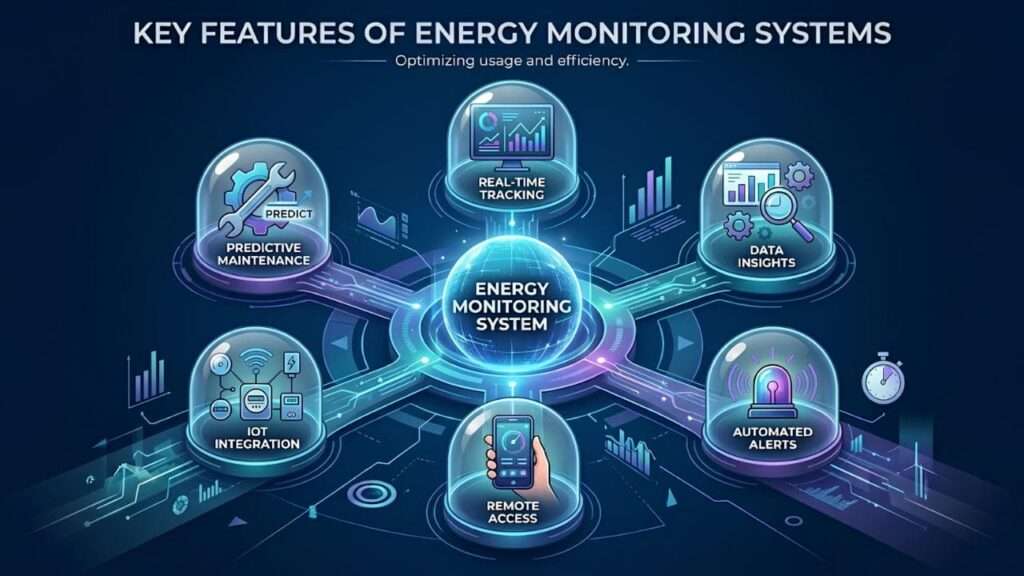
A Smart Energy Monitoring System offers powerful features that help industries track, control, and optimize energy usage in real time. It gives you complete visibility and control over your operations, making energy management simple and efficient.
Key features include:
- Real-Time Monitoring: You track energy usage instantly across machines and systems.
- Data Analytics and Insights: You analyze usage patterns and identify inefficiencies quickly.
- Automated Alerts: The system sends notifications when energy usage exceeds limits.
- Remote Access: You monitor and control systems from anywhere using dashboards.
- IoT Integration: Sensors and smart meters provide accurate, continuous data.
- Predictive Maintenance: You identify potential equipment issues before failure.
These features help industries move toward smarter, data-driven energy management.
Smart Energy Monitoring System vs Traditional Energy Monitoring
Industries no longer rely on outdated energy tracking methods. A smart energy solution offers real-time insights, while traditional monitoring depends on delayed reports and manual tracking. According to the U.S. Department of Energy, real-time monitoring can reduce energy costs by up to 20%, which traditional systems fail to achieve.
Key differences include:
- Real-Time vs Delayed Data: Smart systems provide instant insights, while traditional systems rely on monthly reports.
- Proactive vs Reactive Approach: Smart systems help you act immediately, while traditional methods respond after issues occur.
- Detailed vs Limited Visibility: Smart monitoring tracks machine-level usage, while traditional systems show only total consumption.
- Automation vs Manual Effort: Smart systems automate alerts and controls, while traditional methods require manual checks.
Example: A factory using traditional monitoring notices high electricity bills at the end of the month. With a smart system, the same factory identifies energy spikes instantly and fixes issues before costs increase.
| Feature | Traditional Monitoring | Smart Energy Monitoring System |
| Data Tracking | Monthly | Real-time |
| Decision Making | Reactive | Proactive |
| Efficiency | Low | High |
| Cost Control | Limited | Optimized |
Smart systems transform energy management into a faster, smarter, and more efficient process.
Future Trends in Smart Energy Monitoring System
Smart Energy Monitoring Systems continue to evolve as industries demand better efficiency and automation. Businesses now adopt advanced technologies to gain deeper insights and reduce energy waste. According to the International Energy Agency (IEA), digital energy solutions can improve efficiency by up to 20%.
Key future trends include:
- AI-Driven Automation: Systems automatically adjust energy usage based on real-time demand.
- Integration with Renewable Energy: Businesses connect systems with solar and wind energy sources to reduce dependency on traditional power.
- Smart Grid Connectivity: Systems interact with smart grids to optimize energy distribution and reduce peak demand costs.
- Edge Computing: Data processing happens closer to devices, enabling faster decisions and reduced latency.
- Sustainability Tracking: Companies monitor carbon emissions and meet ESG goals more effectively.
These trends will transform energy monitoring into intelligent, automated systems for future industries.
Why Industries Trust Niraltek
Niraltek helps industries improve energy efficiency with advanced IoT-powered monitoring solutions designed for real-world operations. Our Smart Energy Monitoring System provides real-time visibility into energy consumption, enabling businesses to identify waste, reduce operating costs, and make informed decisions.
We deliver scalable solutions that integrate seamlessly with existing infrastructure, including smart meters, IoT gateways, PLCs, SCADA, and Building Management Systems (BMS). Our customizable dashboards, intelligent alerts, and detailed analytics help organizations monitor energy performance across single or multiple locations from one centralized platform.
From manufacturing plants and commercial buildings to healthcare facilities and data centers, Niraltek develops solutions tailored to each industry’s operational needs. Our team supports customers from consultation and deployment through ongoing maintenance, ensuring reliable performance and long-term value.
With a strong focus on innovation, reliability, and customer success, Niraltek enables organizations to optimize energy usage, achieve sustainability goals, and improve overall operational efficiency.
Ready to optimize your energy consumption? Explore Niraltek’s Smart Energy Management Solution to monitor energy usage in real time, reduce operational costs, and improve sustainability across your industrial operations.
Conclusion
A Smart Energy Monitoring System is no longer optional-it has become essential for industries that want to control costs, improve efficiency, and stay competitive. By using real-time data, IoT technology, and intelligent insights, businesses can move from guesswork to precise, data-driven decisions.
From manufacturing plants to commercial buildings, organizations that adopt smart energy solutions gain better visibility into their operations, reduce energy waste, and achieve measurable cost savings. More importantly, they take a step toward sustainability by lowering their carbon footprint and meeting ESG goals.
As energy demands continue to rise, companies that invest in smart monitoring systems will stay ahead of the curve. If you want to optimize energy usage and improve operational performance, now is the right time to adopt a smarter, more efficient approach.
FAQs
1. What is a Smart Energy Monitoring System?
A smart energy monitoring system helps businesses track, analyze, and optimize energy usage in real time using IoT devices and data analytics. It provides insights to reduce energy waste and improve efficiency.
2. How does this system work?
It collects data from sensors and smart meters, sends it to a cloud platform, and analyzes it to show real-time energy usage. It also sends alerts when consumption exceeds limits.
3. What are the benefits of energy monitoring systems?
- Reduces energy costs
- Improves operational efficiency
- Provides real-time insights
- Supports sustainability goals
- Enables predictive maintenance
4. Which industries use these systems?
Industries like manufacturing, commercial buildings, healthcare, data centers, and smart cities use these solutions to manage energy efficiently.
5. Is it suitable for small businesses?
Yes, these solutions offer scalable options, making them suitable for both small and large businesses.
6. How much does it cost?
The cost depends on system size, features, and number of connected devices. Most businesses recover the investment through energy savings.
7. How does IoT improve energy monitoring?
IoT devices collect real-time data from machines and systems, helping businesses monitor usage accurately and make faster decisions.
8. Can it reduce electricity bills?
Yes, by identifying energy waste and optimizing usage, businesses can reduce electricity costs by up to 20%.