

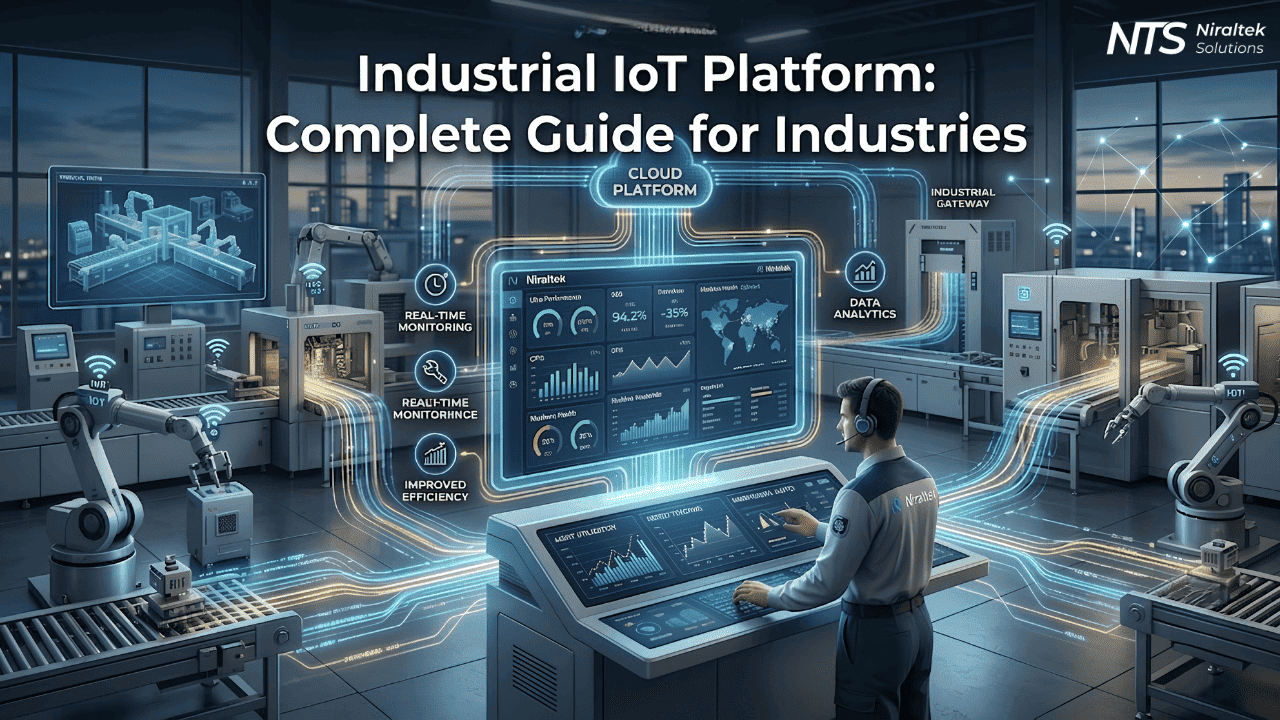
Manufacturers today face rising operational costs, unexpected equipment failures, and limited visibility into factory operations. An Industrial IoT Platform helps businesses connect machines, monitor assets in real time, and make faster, data-driven decisions. According to IoT Analytics, the number of connected IoT devices is expected to reach 21.1 billion in 2025, highlighting the rapid adoption of connected technologies. Additionally, McKinsey estimates that IoT could generate $5.5 trillion to $12.6 trillion in global economic value annually by 2030.
Key benefits of an Industrial IoT Platform:
- Real-time equipment monitoring
- Predictive maintenance and reduced downtime
- Improved production efficiency
- Better asset utilization
- Data-driven operational insights
What Is an Industrial IoT Platform?
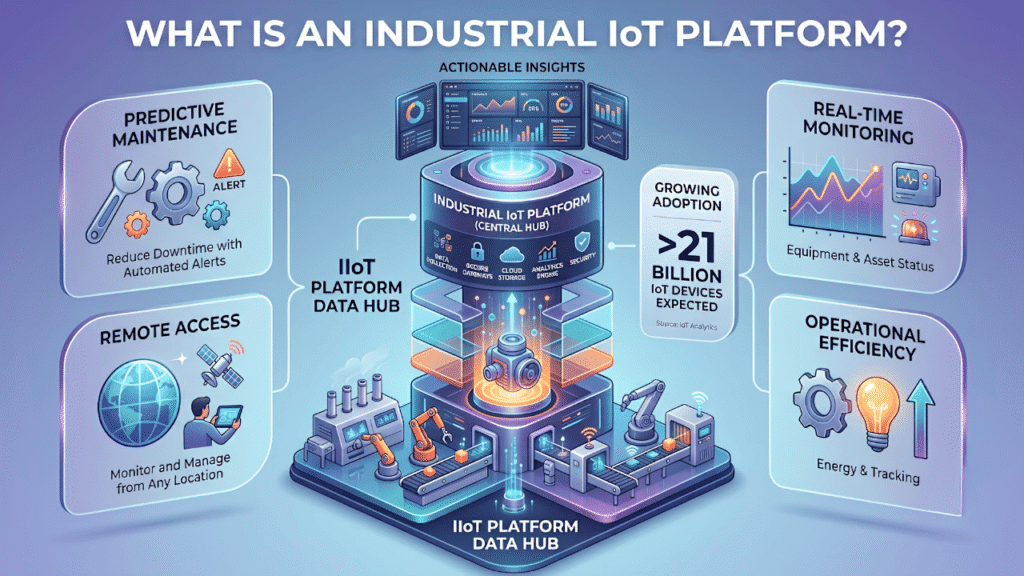
An IIoT Platform is a software platform that connects industrial machines, sensors, devices, and equipment to collect, monitor, and analyze real-time operational data. It helps manufacturers improve productivity, reduce downtime, and make faster, data-driven decisions from a single dashboard. According to IoT Analytics, more than 21 billion IoT devices are expected to be connected worldwide, highlighting the growing adoption of Industrial IoT solutions across industries.
Key capabilities of an Industrial IoT Platform
- Real-time equipment and asset monitoring
- Predictive maintenance with automated alerts
- Remote monitoring from any location
- Data analytics and performance dashboards
- Energy and operational efficiency tracking
| Component | Purpose |
| IoT Sensors | Collect machine and environmental data |
| IoT Gateway | Transfers data securely to the cloud |
| Cloud Platform | Stores and processes industrial data |
| Analytics Dashboard | Displays KPIs, trends, and reports |
Key Features of an Industrial IoT Platform
An IIoT Platform gives industries complete visibility into machines, assets, and operations from a single dashboard. It helps businesses monitor performance, detect issues early, and improve productivity with real-time insights.
Key Features
- Real-Time Monitoring: Track machine health, temperature, pressure, and energy usage instantly.
- Predictive Maintenance: Identify equipment issues before failures occur, reducing unplanned downtime.
- Remote Asset Monitoring: Monitor factory equipment from any location using cloud-based dashboards.
- Industrial Analytics: Analyze production data, identify trends, and improve operational efficiency.
- Automated Alerts: Receive instant notifications when equipment exceeds predefined thresholds.
- Scalable Integration: Connect sensors, PLCs, SCADA systems, ERP software, and IoT devices on one platform.
Benefits of an Industrial IoT Platform
This platform helps businesses improve efficiency, reduce operational costs, and make smarter decisions using real-time data. Instead of reacting to equipment failures, companies can monitor assets continuously and take action before problems affect production.
Key Benefits
- Reduce Downtime: Detect equipment issues early and schedule maintenance before failures occur.
- Improve Productivity: Monitor production performance and identify bottlenecks in real time.
- Lower Operational Costs: Optimize energy consumption, maintenance schedules, and resource utilization.
- Enhance Asset Visibility: Track machines, equipment, and remote assets from a centralized dashboard.
- Support Data-Driven Decisions: Use analytics and performance reports to improve operational planning.
- Increase Workplace Safety: Monitor critical equipment and receive instant alerts when abnormal conditions occur.
Looking for an enterprise Industrial IoT Platform? Explore Niraltek’s Industrial IoT Platform for real-time monitoring and smart manufacturing solutions.
How an Industrial IoT Platform Works
The platform connects industrial machines, sensors, PLCs, and IoT devices to collect and analyze real-time data. It transforms raw machine data into actionable insights that improve productivity, reduce downtime, and support smarter business decisions. The platform also integrates an IoT remote asset monitoring system, predictive maintenance software, industrial analytics platform, OEE monitoring software, and smart manufacturing platform capabilities into one centralized solution.
How the process works
- Connect Devices: Sensors, PLCs, and machines continuously capture operational data.
- Transfer Data: IoT gateways securely send data to the cloud or edge platform.
- Analyze Information: The industrial analytics platform processes data and identifies trends, anomalies, and performance issues.
- Monitor Performance: The OEE monitoring software tracks equipment availability, performance, and quality in real time.
- Take Action: The predictive maintenance software sends alerts before equipment fails, while the IoT remote asset monitoring system allows teams to monitor assets from anywhere.
IIoT Platform Architecture
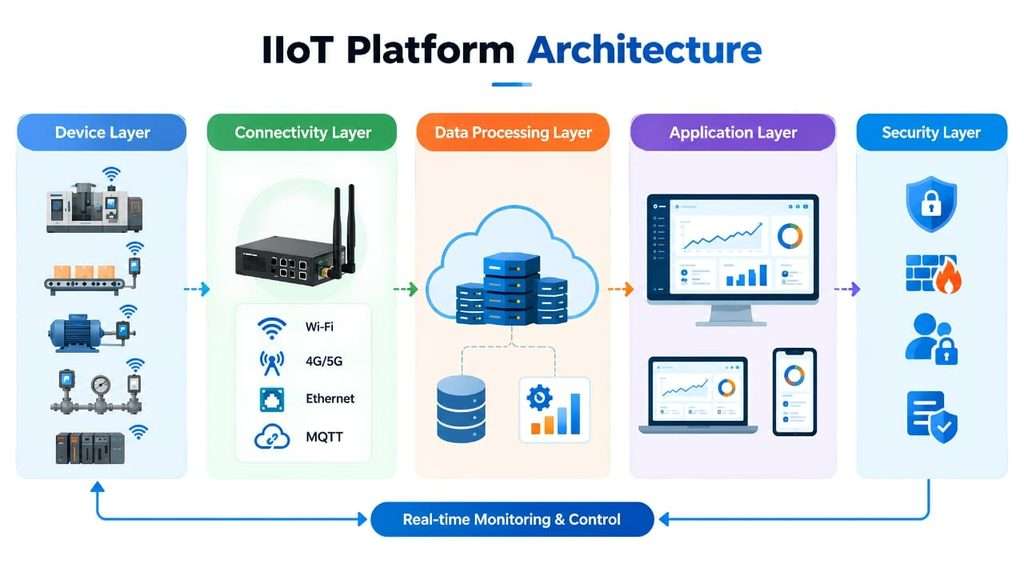
A well-designed IIoT architecture provides the foundation for connecting machines, sensors, and business applications into one intelligent ecosystem. It enables organizations to collect real-time data, analyze equipment performance, and improve operational efficiency. A well-designed architecture also supports IoT remote asset monitoring systems, predictive maintenance software, industrial analytics platforms, and smart manufacturing platforms.
Key Layers of an IIoT Platform Architecture
- Device Layer: IoT sensors, PLCs, machines, and industrial equipment collect operational data.
- Connectivity Layer: IoT gateways securely transmit data using Ethernet, Wi-Fi, 4G/5G, or MQTT protocols.
- Data Processing Layer: The industrial analytics platform processes real-time data and generates actionable insights.
- Application Layer: Dashboards, OEE monitoring software, and predictive maintenance software help teams monitor assets and improve production.
- Security Layer: Encryption, authentication, and role-based access protect industrial data and connected devices.
IIoT Platform Use Cases
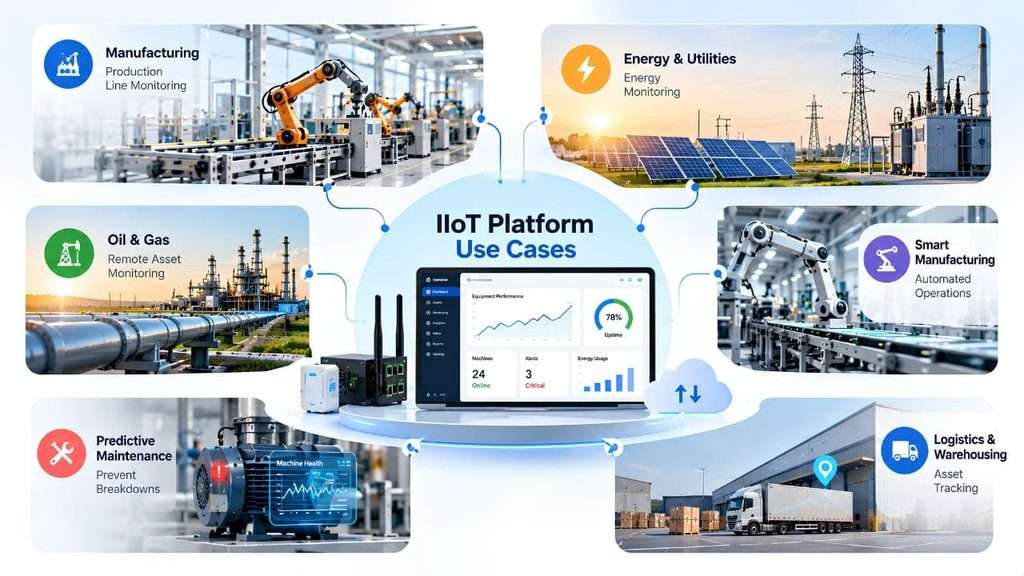
This solution helps organizations monitor assets, improve operational efficiency, and automate critical processes across multiple industries. By combining real-time monitoring, analytics, and intelligent automation, businesses can reduce downtime, increase productivity, and make faster decisions.
Common Industrial IoT Platform Use Cases
- Manufacturing: Monitor production lines, improve equipment performance, and use OEE monitoring software to maximize productivity.
- Energy & Utilities: Track energy consumption, monitor substations, and optimize power distribution.
- Oil & Gas: Use an IoT remote asset monitoring system to monitor pipelines, pumps, and remote facilities in real time.
- Smart Manufacturing: Connect machines, robots, and production systems through a smart manufacturing platform for automated operations.
- Predictive Maintenance: Use predictive maintenance software to detect equipment issues early and prevent unexpected failures.
- Logistics & Warehousing: Track assets, monitor fleet performance, and improve inventory visibility using an industrial analytics platform.
Industrial IoT Platform vs Traditional SCADA Systems
Both IIoT Platforms and SCADA (Supervisory Control and Data Acquisition) systems help industries monitor equipment and processes. However, an Industrial IoT Platform offers greater flexibility, cloud connectivity, and advanced analytics. It integrates IoT remote asset monitoring systems, predictive maintenance software, industrial analytics platforms, and OEE monitoring software to support modern smart manufacturing platforms.
Key Differences
| Industrial IoT Platform | Traditional SCADA System |
| Cloud and edge-based monitoring | Primarily on-premise monitoring |
| Supports remote asset monitoring | Limited remote access |
| Uses predictive maintenance software | Mainly reactive maintenance |
| Provides advanced industrial analytics | Basic monitoring and reporting |
| Easily integrates with ERP, MES, and cloud services | Limited third-party integration |
| Scales across multiple plants | Better suited for a single facility |
Why Choose an Industrial IoT Platform?
- Monitor assets from anywhere.
- Analyze real-time operational data.
- Reduce downtime with predictive maintenance.
- Improve productivity using OEE monitoring.
- Scale operations across multiple factories.
How to Choose the Right IIoT Solution
Selecting the right IIoT Platform can improve productivity, reduce downtime, and support long-term business growth. The ideal platform should integrate with your existing systems, scale as your operations grow, and provide real-time insights for better decision-making. It should also include features such as IoT remote asset monitoring, predictive maintenance software, industrial analytics, and OEE monitoring to maximize operational efficiency.
What to Look For
- Easy Integration: Connect seamlessly with PLCs, SCADA, ERP, MES, and existing industrial equipment.
- Scalability: Support additional machines, production lines, or multiple facilities as your business expands.
- Real-Time Monitoring: Track assets and equipment from anywhere using an IoT remote asset monitoring system.
- Advanced Analytics: Choose a platform with an industrial analytics platform for actionable insights.
- Predictive Maintenance: Reduce unexpected breakdowns with built-in predictive maintenance software.
- Security: Protect industrial data with encryption, user authentication, and secure cloud connectivity.
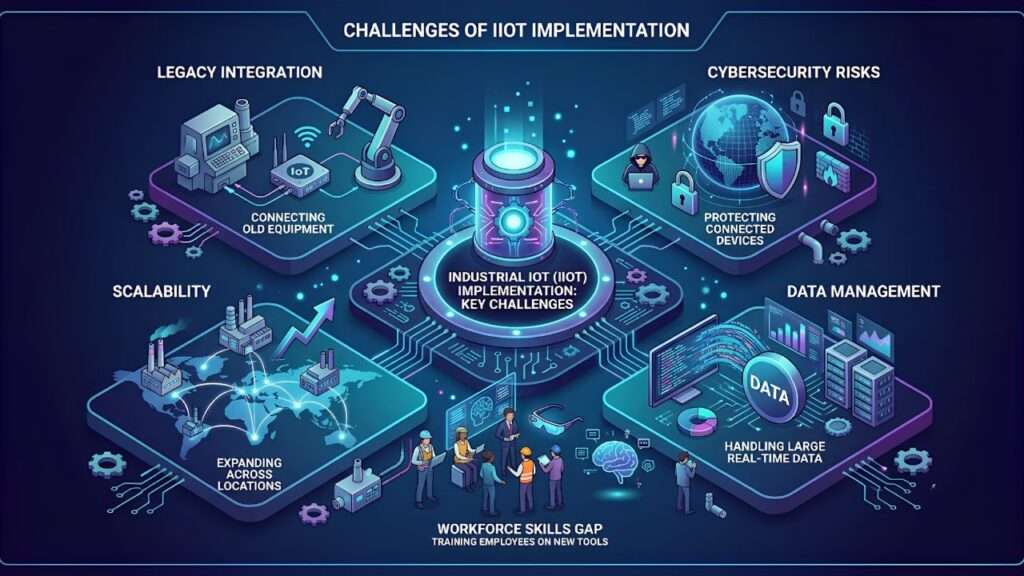
Challenges of Implementing an Industrial IoT Platform
Implementing an IIIoT Platform delivers significant business value, but organizations often face technical and operational challenges during deployment. Legacy equipment, cybersecurity risks, and integration issues can slow adoption if businesses do not plan carefully. According to a 2024 industry report, 50% of businesses lack the in-house skills needed for IoT security, data science, and connectivity, making implementation more challenging.
Common Challenges
- Integrating legacy machines with modern IoT technologies.
- Protecting connected devices from cybersecurity threats.
- Managing large volumes of real-time industrial data.
- Training employees to use new digital tools.
- Scaling the platform across multiple factories or locations.
| Challenge | Solution |
| Legacy system integration | Use IoT gateways and standard communication protocols |
| Cybersecurity risks | Implement encryption, multi-factor authentication, and continuous monitoring |
| Data management | Use cloud storage and industrial analytics platforms |
| Workforce training | Provide hands-on training and technical support |
| Scalability | Choose a flexible Industrial IoT Platform that grows with your business |
Future Trends in Industrial IoT Platforms
The future of Industrial IIoT solution focuses on intelligent automation, real-time decision-making, and connected operations. As industries adopt digital transformation, Industrial IoT Platforms will combine artificial intelligence, edge computing, and advanced analytics to improve efficiency, reduce costs, and increase productivity. Businesses that invest in these technologies will gain better visibility, faster insights, and greater operational flexibility.
Emerging Trends
- AI-Powered Analytics: Artificial intelligence identifies equipment issues, predicts failures, and recommends corrective actions.
- Edge Computing: Process data closer to machines for faster response times and lower network latency.
- Digital Twins: Create virtual models of industrial assets to simulate performance and optimize operations.
- 5G Connectivity: Enable faster, more reliable communication between connected devices and production systems.
- Sustainable Manufacturing: Monitor energy consumption and reduce carbon emissions through real-time optimization.
- Cloud-Based IoT Platforms: Manage multiple factories and remote assets from a centralized dashboard.
Ready to modernize your industrial operations? Discover how Niraltek’s Industrial IIoT solution helps you monitor assets in real time, reduce downtime, and improve operational efficiency with intelligent, data-driven insights.
Conclusion
An IIoT Solution plays a vital role in helping industries improve efficiency, reduce downtime, and make smarter decisions through real-time data. By connecting machines, sensors, and industrial systems, businesses gain complete visibility into operations, optimize asset performance, and support predictive maintenance. Whether you operate in manufacturing, energy, logistics, or utilities, the right Industrial IoT Platform can accelerate digital transformation and deliver long-term business value.
If you’re looking for a reliable solution, Niraltek’s Industrial IIoT platform offers real-time asset monitoring, predictive maintenance, industrial analytics, and seamless integration with your existing infrastructure. It empowers businesses to increase productivity, lower operational costs, and build a smarter, more connected future.
Ready to transform your industrial operations? Explore Niraltek’s IIoT Platform and discover how intelligent IIoT solutions can help your business achieve greater efficiency, scalability, and sustainable growth.
Frequently Asked Questions (FAQs)
1. What is an Industrial IoT Platform?
An Industrial IoT Platform is a software solution that connects industrial machines, sensors, and devices to collect, monitor, and analyze real-time operational data. It helps businesses improve productivity, reduce downtime, and make faster, data-driven decisions.
2. What are the main benefits of this solution?
The platform helps businesses monitor assets in real time, reduce unexpected downtime, improve operational efficiency, lower maintenance costs, and make better decisions using industrial analytics.
3. How does it improve manufacturing operations?
The system continuously monitors production equipment, tracks machine performance, and provides real-time insights. Manufacturers can improve product quality, reduce downtime, and optimize production through predictive maintenance and performance monitoring.
4. Which industries can use this technology?
This solution is widely used across industries, including:
- Manufacturing
- Energy & Utilities
- Oil & Gas
- Logistics & Warehousing
- Food & Beverage
- Smart Buildings
- Water & Wastewater Management
5. What is the difference between IoT and Industrial IoT?
IoT mainly focuses on consumer devices such as smart homes and wearable technology. Industrial IoT (IIoT) is designed for factories and industrial environments, where connected machines and sensors help improve automation, productivity, and operational efficiency.
6. Can it support remote asset monitoring?
Yes. The platform allows businesses to monitor machines, equipment, and remote industrial assets from anywhere through secure cloud-based dashboards and real-time data.
7. How does predictive maintenance work?
The system collects real-time sensor data and continuously monitors equipment health. It detects potential failures before they happen, allowing maintenance teams to schedule repairs early and reduce unexpected downtime.
8. Can the platform integrate with existing industrial systems?
Yes. It can integrate with PLCs, SCADA systems, ERP software, MES platforms, industrial sensors, and other third-party applications without requiring major infrastructure changes.
9. How does it improve production efficiency?
By analyzing machine performance, equipment availability, and production quality, the platform helps identify bottlenecks, improve resource utilization, and increase overall operational efficiency.
10. Why choose Niraltek for Industrial IoT solutions?
Niraltek provides an advanced IIoT solution with real-time monitoring, predictive maintenance, industrial analytics, secure cloud connectivity, and seamless integration. It helps businesses improve productivity, reduce operational costs, and accelerate their digital transformation.