

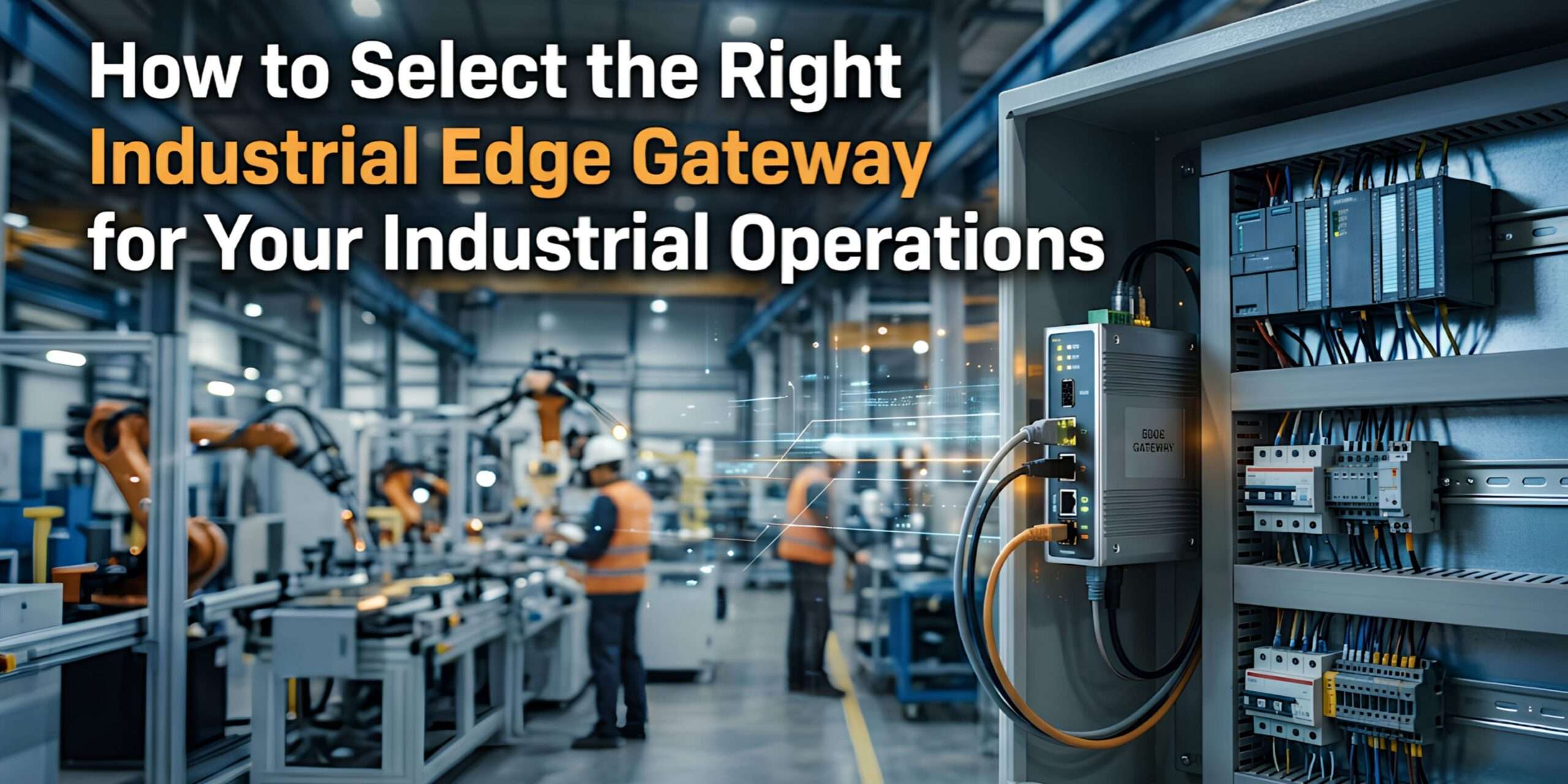
Modern manufacturing facilities rely on connected machines, sensors and automation systems to keep operations running smoothly. However, disconnected equipment, incompatible communication protocols and limited access to real-time data can make industrial monitoring difficult.
An Industrial Edge Gateway helps solve these challenges by connecting factory equipment, collecting operational data and enabling communication between machines and monitoring platforms. It can also process selected data closer to industrial equipment, helping businesses improve data visibility and make informed operational decisions.
With the right gateway solution, manufacturers can:
- Connect Industrial Devices: Link PLCs, sensors, machines and other equipment.
- Simplify Data Communication: Support compatible protocols such as Modbus and MQTT.
- Improve Data Visibility: Access equipment information through centralized monitoring platforms.
- Enable Local Processing: Filter and process selected data closer to machines.
- Support Industrial Growth: Build scalable connectivity as operations expand.
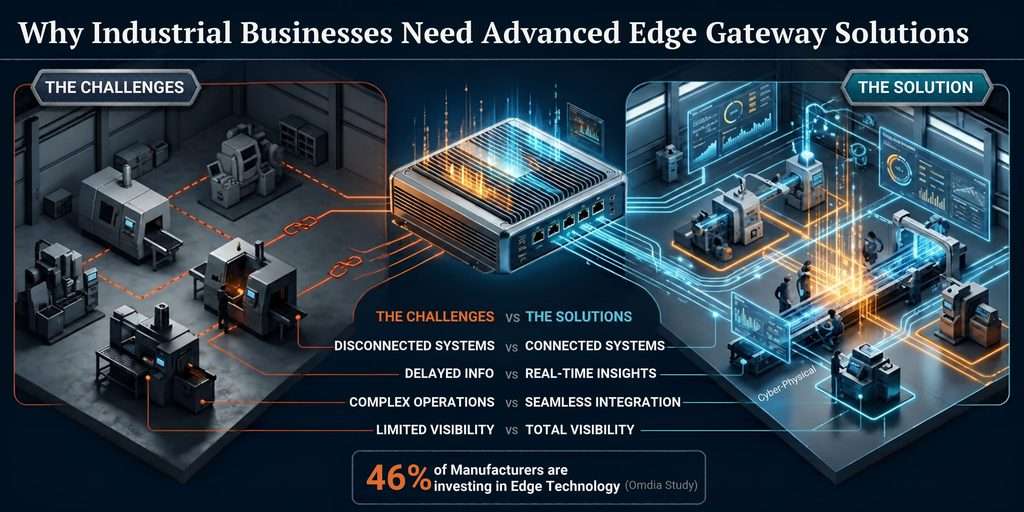
Why Industrial Businesses Need Advanced Edge Gateway Solutions
Modern industrial facilities face several connectivity challenges that can affect production efficiency and daily operations. Different machines may use incompatible communication systems, while limited data visibility can make it difficult for teams to identify operational issues quickly.
A 2025 Omdia study found that 46% of manufacturers planned to increase their investments in edge technology over the following 18 months, highlighting growing interest in industrial edge computing.
Businesses need advanced connectivity solutions to address challenges such as:
- Communication Gaps: Different machines and control systems may struggle to exchange operational data.
- Delayed Decisions: Limited access to timely equipment information can slow down responses to production issues.
- Integration Challenges: Older industrial equipment may require additional integration support.
- Limited Operational Visibility: Teams may find it difficult to track machine performance across different production areas.
| Industrial challenge | Business impact |
| Disconnected systems | Limited coordination |
| Delayed information | Slower decisions |
| Integration difficulties | Complex operations |
| Limited visibility | Harder performance tracking |
An effective connectivity strategy helps businesses address these challenges and build smarter industrial operations.
Key Features to Look for in an Industrial Edge Gateway Solution
Choosing the right gateway requires more than checking device connectivity. Businesses should evaluate its communication capabilities, processing performance, security and ability to support future requirements.
Here are eight important features to consider:
- Multi-Protocol Support: Check compatibility with Modbus RTU/TCP, MQTT and OPC UA. For example, a gateway can collect PLC data and transmit it to an IoT platform using a supported protocol.
- Edge Data Processing: Look for local data filtering, aggregation and analysis to reduce unnecessary data transfers.
- Flexible Connectivity: Evaluate Ethernet, RS485, Wi-Fi and cellular options.
- Strong Security: Check encryption, authentication and access controls.
- Industrial Reliability: Choose hardware suitable for factory temperatures, vibration and dust.
- Scalability: Support additional machines and sensors as operations grow.
- Data Buffering: Check whether the gateway stores data during temporary network interruptions.
- Remote Management: Consider remote configuration, diagnostics and software updates.
Industrial Applications of Edge Gateway Solutions
Industrial edge gateways support different industries by helping businesses collect equipment data and improve operational visibility. Here are some common applications:
- Smart Manufacturing: Monitor production lines, machine status and operating performance. For example, factory managers can track machine downtime through a centralized dashboard.
- Predictive Maintenance: Collect motor vibration and temperature readings to help maintenance teams identify unusual equipment behaviour early.
- Energy Management: Monitor electricity meters and power analysers to understand energy consumption across production units.
- Industrial Automation: Enable communication between controllers, sensors and automated production equipment.
- Building Management: Monitor HVAC systems, pumps and other facility equipment to improve operational control.
- Cold Storage Monitoring: Collect temperature and humidity readings to help operators maintain suitable storage conditions.
Example: A manufacturing facility can use gateway-connected sensors to monitor motor temperature and identify unusual readings, helping maintenance teams investigate potential equipment problems.
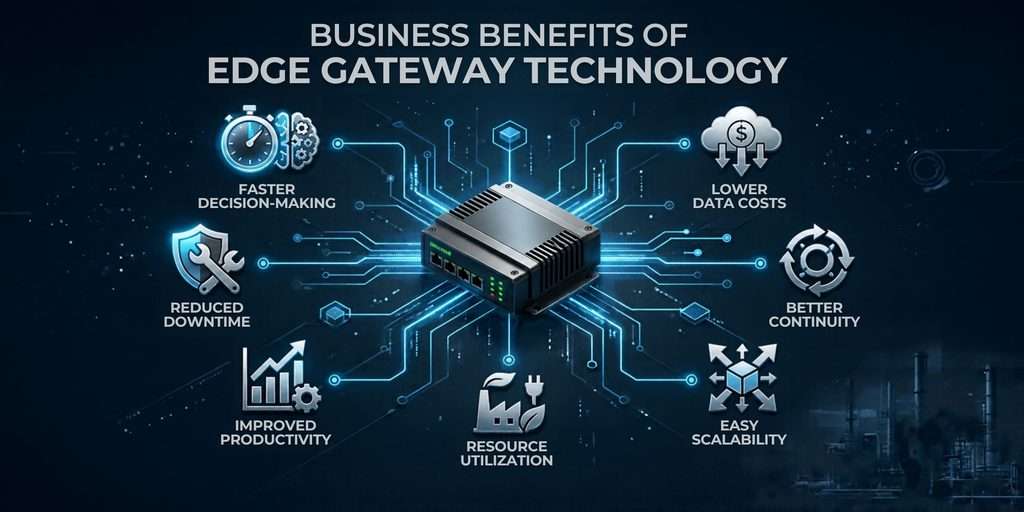
Business Benefits of Edge Gateway Technology
Implementing this technology can help businesses improve production efficiency, manage operational costs and make better use of industrial resources. Here are some important business benefits:
- Faster Decision-Making: Give operators quicker access to relevant machine information so they can respond to operational issues sooner.
- Reduced Downtime: Identify unusual equipment readings early and help maintenance teams plan inspections before minor issues become major problems.
- Lower Data Transfer Costs: Filter unnecessary information before sending data to cloud platforms, potentially reducing bandwidth usage.
- Improved Productivity: Give production teams better operational insights to identify bottlenecks and improve workflows.
- Better Operational Continuity: Support local data handling and help maintain essential monitoring functions during temporary network interruptions, where supported.
- Better Resource Utilization: Help businesses understand equipment performance and energy consumption to identify opportunities for improvement.
- Easy Scalability: Expand connectivity as businesses add machines, sensors and production facilities.
Example: A factory can use equipment data to identify recurring machine issues, plan maintenance and reduce unexpected production interruptions.
How to Choose the Right Industrial Edge Gateway for Your Business
Selecting the right gateway requires understanding your factory requirements, existing infrastructure and future plans. Consider these factors before making a purchase:
- Check Equipment Compatibility: Ensure the gateway works with your existing PLCs, sensors, meters and industrial systems.
- Review Data Requirements: Identify how much data your machines generate and whether you need basic collection or advanced processing.
- Evaluate Integration: Check whether the gateway can connect with your existing SCADA systems, IoT platforms and monitoring software.
- Assess Security Requirements: Review the vendor’s security features, access controls and data protection practices.
- Check Industrial Suitability: Consider operating temperature, vibration, dust exposure and installation conditions.
- Compare Total Costs: Evaluate installation, maintenance, licensing and future expansion expenses.
- Review Technical Support: Check warranty coverage, documentation and after-sales assistance.
- Plan for Expansion: Choose a solution that can accommodate additional equipment and production units.
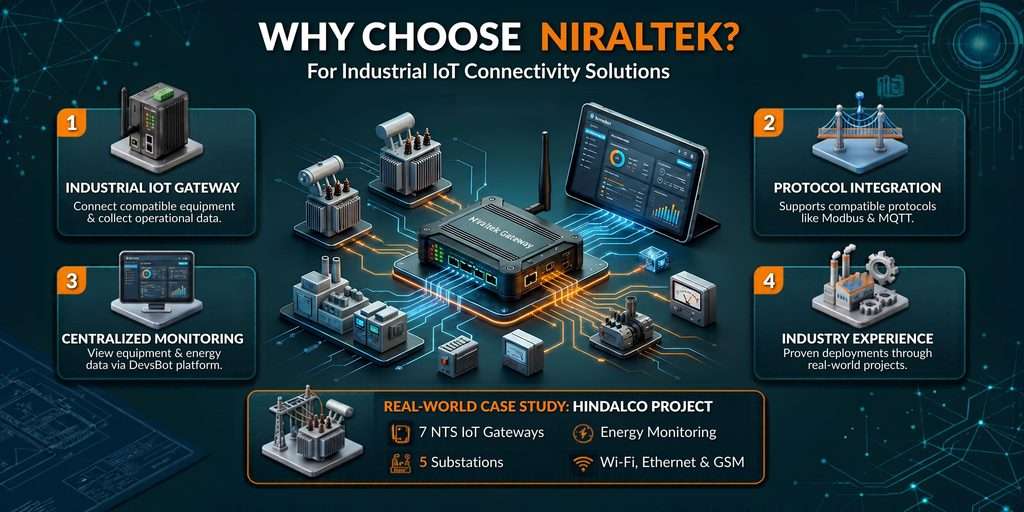
Why Choose Niraltek for Industrial IoT Connectivity Solutions?
Niraltek Solutions helps manufacturing and industrial businesses build connected operations through its NTS Industrial IoT Gateway and DevsBot platform. These solutions support industrial data collection, equipment connectivity and centralized monitoring.
Why consider Niraltek for your industrial IoT requirements?
- Industrial IoT Gateway: Connect compatible industrial equipment and collect operational data.
- Protocol Integration: Support communication through compatible industrial protocols such as Modbus and MQTT.
- Centralized Monitoring: Use the DevsBot platform to view equipment and energy-related information.
- Industry Experience: Explore Niraltek’s industrial deployment experience through real-world projects.
Real-World Example: Hindalco Project
Niraltek deployed seven NTS IoT Gateways across five substations at Hindalco to support centralized energy monitoring and data collection.
| Deployment Detail | Project Information |
| NTS IoT Gateways | 7 units |
| Substations | 5 |
| Application | Energy monitoring |
| Connectivity | Wi-Fi, Ethernet and GSM |
Looking for an Industrial IoT Connectivity Solution?
Connect with Niraltek Solutions to discuss your industrial requirements and explore suitable gateway and monitoring solutions.
Visit Niraltek Industrial IoT Solutions to learn more.
Conclusion
An Industrial Edge Gateway plays an important role in building smarter, more connected manufacturing environments. By connecting industrial equipment, supporting different communication protocols and enabling local data processing, it helps businesses improve operational visibility, streamline industrial communication and make informed decisions.
From smart manufacturing and predictive maintenance to energy management and building automation, the right gateway solution can support a wide range of industrial applications. However, businesses should evaluate equipment compatibility, connectivity, security, processing requirements and future scalability before choosing a solution.
Niraltek Solutions helps industries strengthen their IoT connectivity through its NTS Industrial IoT Gateway and DevsBot platform. With industrial deployment experience, Niraltek supports businesses looking to improve equipment connectivity and centralized monitoring.
Ready to strengthen your industrial connectivity? Explore Niraltek’s Industrial IoT Solutions and connect with our team to discuss your project requirements.
Frequently Asked Questions About Industrial Edge Gateways
1. What is an Industrial Edge Gateway?
An Industrial Edge Gateway is a device that connects industrial machines, sensors and control systems with monitoring platforms. It collects data from equipment and can process selected information locally before sending it to cloud or centralized systems.
2. How does an Industrial Edge Gateway work?
It collects data from connected devices such as PLCs, sensors and meters. It processes or filters the information and transfers relevant data to an IoT platform or monitoring dashboard for analysis.
3. What are the main benefits of an Industrial Edge Gateway?
This solution offers several benefits:
- Improves industrial device connectivity.
- Supports faster access to operational data.
- Helps reduce unnecessary data transfers.
- Supports equipment monitoring.
- Improves industrial data visibility.
- Enables scalable IoT integration.
4. Which Communication Protocols Should the Gateway Support?
Protocol requirements depend on the connected equipment and application. Common industrial communication protocols include Modbus RTU, Modbus TCP, MQTT and OPC UA. Businesses should check compatibility before selecting a gateway.
5. What is the difference between an Industrial IoT Gateway and an Industrial Edge Gateway?
An Industrial IoT Gateway primarily connects industrial devices with IoT platforms and networks. An Industrial Edge Gateway also emphasizes processing and analyzing data closer to its source. Many modern gateways combine both capabilities.
6. How does an Industrial Edge Gateway support smart manufacturing?
It connects production equipment, PLCs and sensors to monitoring platforms. Manufacturers can use the collected information to track machine performance, monitor production activities and identify operational issues.
7. Can an Industrial Edge Gateway help with predictive maintenance?
Yes. A suitable gateway can collect equipment data, including vibration, temperature and pressure readings. Maintenance teams can analyze this information to identify unusual patterns and investigate potential equipment problems.
8. Can an Industrial Edge Gateway reduce data transfer costs?
It can help reduce unnecessary data transfers by filtering and processing selected information locally before sending it to cloud platforms. Actual savings depend on data volume, network usage and the gateway configuration.
9. How do I choose the right Industrial Edge Gateway for my business?
Consider these factors before selecting a gateway:
- Compatibility with existing machines and PLCs.
- Required communication protocols.
- Connectivity options.
- Data processing requirements.
- Security capabilities.
- Industrial operating conditions.
- Future expansion requirements.