

Energy costs are rising, and businesses struggle to track and control their consumption effectively. Without real-time insights, companies often face energy waste, high operational costs, and compliance challenges. According to the International Energy Agency (IEA), improving energy efficiency could reduce global energy demand by over 12% by 2040. This is where Energy Management Software becomes essential, helping organizations monitor, analyze, and optimize energy usage efficiently.
- Reduce energy costs by up to 20% with data-driven insights
- Improve operational efficiency through real-time monitoring
- Support sustainability goals and regulatory compliance
What is Energy Management Software?
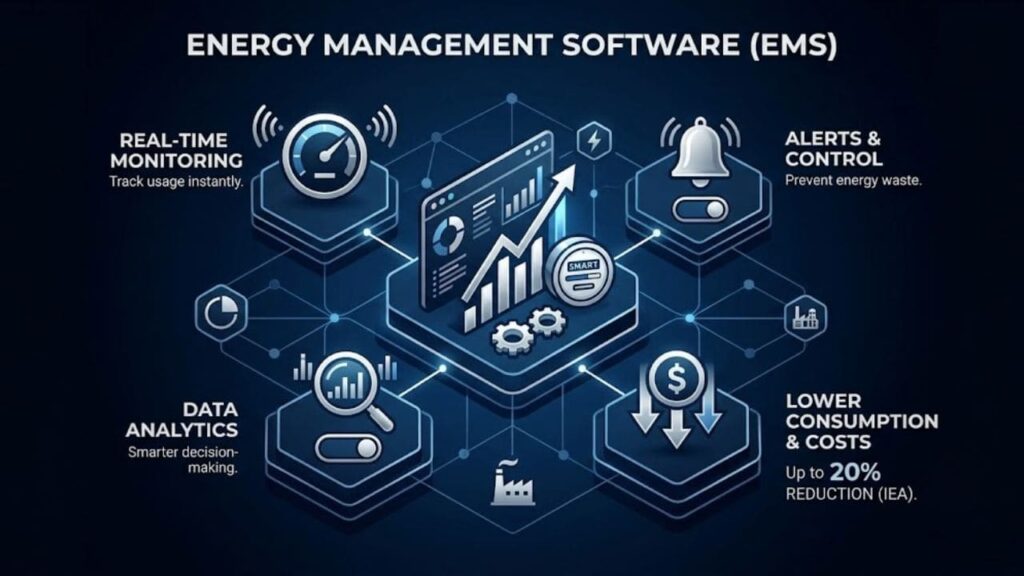
Energy Management Software helps businesses monitor, control, and optimize their energy usage in real time. It connects with smart meters, IoT sensors, and machines to collect data and turn it into actionable insights. According to the International Energy Agency (IEA), companies can reduce energy consumption by up to 20% using smart energy systems.
Key Functions:
- Track real-time energy consumption
- Identify energy waste and inefficiencies
- Generate reports for better decision-making
Example:
A manufacturing plant uses energy management software to monitor machine usage and reduces electricity costs by 15%.
| Feature | Benefit |
| Real-time Monitoring | Instant visibility of usage |
| Data Analytics | Better decision-making |
| Alerts & Notifications | Prevent energy waste |
| IoT Integration | Automated energy control |
Key Features of Energy Management Software
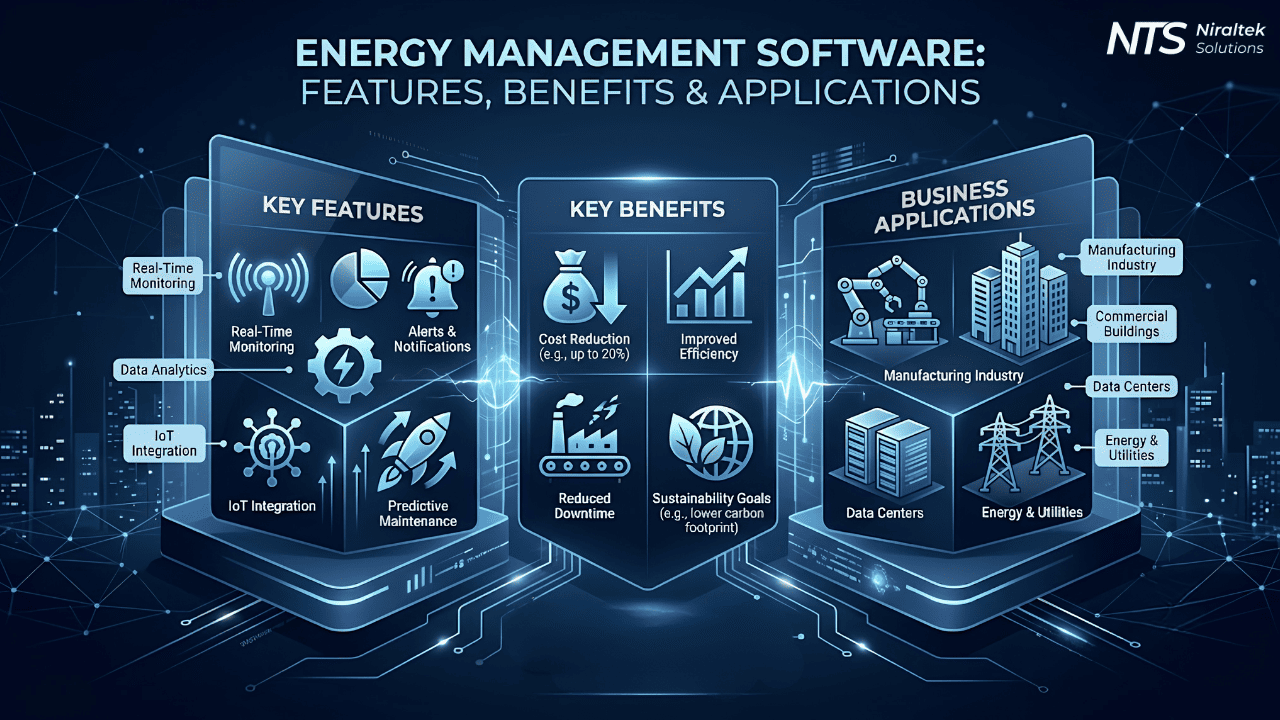
Energy management systems offer powerful features that help businesses control and optimize energy usage efficiently. These solutions provide real-time visibility and actionable insights, allowing teams to make faster decisions and reduce costs.
Key Features:
- Real-Time Monitoring: Track energy consumption instantly across machines and facilities.
- Data Analytics & Reporting: Analyze usage patterns and identify energy-saving opportunities.
- Alerts & Notifications: Get instant alerts when energy usage exceeds limits.
- IoT Integration: Connect with smart sensors and devices for automated control.
- Predictive Maintenance: Detect potential equipment issues before failures occur.
Example:
A factory uses real-time monitoring to identify energy spikes during peak hours and adjusts machine usage, reducing electricity costs by 18%.
These features help businesses improve efficiency, reduce waste, and achieve sustainability goals effectively.
Benefits of Energy Management Software
Energy management systems help businesses reduce costs and improve operational efficiency with data-driven insights. These solutions give full control over energy usage, allowing teams to make smarter and faster decisions.
Key Benefits:
- Cost Reduction: Identify energy waste and cut electricity bills by up to 20%.
- Improved Efficiency: Monitor energy usage in real time and optimize operations.
- Reduced Downtime: Detect issues early and avoid unexpected equipment failures.
- Sustainability Goals: Lower carbon footprint and meet environmental regulations.
- Better Decision-Making: Use accurate data to plan energy strategies effectively.
Example:
A commercial building uses energy management system
to monitor HVAC systems and reduces energy consumption by 15% during peak hours.
These benefits help organizations stay competitive, reduce operational costs, and move toward smarter, sustainable energy management.
Business Applications of Energy Management Systems
Businesses across industries use energy management systems to control energy costs and improve efficiency. These solutions provide real-time insights that help teams optimize operations and reduce waste.
Key Applications:
- Manufacturing Industry: Monitor machine energy usage and reduce peak-hour consumption.
- Commercial Buildings: Optimize HVAC, lighting, and elevators to cut energy costs.
- Data Centers: Track power usage and prevent overheating or system failures.
- Energy & Utilities: Manage energy distribution and improve grid performance.
Example:
A manufacturing company uses energy monitoring to identify high-energy machines and schedules operations during off-peak hours, reducing electricity costs by 18%.
- Improve operational efficiency across departments
- Reduce energy waste with data-driven insights
- Support sustainability and compliance goals
These applications help businesses gain better control over energy usage while improving performance and profitability.
How Energy Management Software Works with Industrial IoT
Integration with Industrial IoT Systems
Energy Management Software works closely with Industrial IoT (IIoT) to deliver real-time energy insights and automation. It connects sensors, machines, and devices to collect accurate energy data across operations.
How it works:
- IoT Sensors: Capture real-time data from machines, meters, and equipment
- Data Transmission: Send data to cloud platforms for processing
- Analytics Dashboard: Display insights for monitoring and decision-making
- Automation: Adjust energy usage based on predefined rules
Example:
A factory installs IoT sensors on production machines. The system detects high energy usage during idle time and automatically reduces power consumption, saving up to 15% on energy costs.
- Improve visibility across operations
- Enable predictive maintenance
- Optimize energy usage with automation
This integration helps businesses achieve smarter, data-driven energy management.
Types of Energy Management Systems
Different Types of Energy Management Systems
Businesses choose different types of energy management systems based on their needs, infrastructure, and scalability goals. Each type offers unique advantages for monitoring and controlling energy usage.
Main Types:
- Cloud-Based Systems: Access data anytime through the internet and scale easily.
- On-Premise Systems: Store data locally for better control and security.
- Hybrid Systems: Combine cloud flexibility with on-site control.
Example:
A retail chain uses a cloud-based system to monitor energy across multiple stores, while a manufacturing plant prefers an on-premise system for secure data handling.
- Improve flexibility with cloud solutions
- Ensure data security with on-premise systems
- Balance performance with hybrid systems
Choosing the right type helps businesses optimize energy usage and align with operational goals effectively.
How to Choose the Best Energy Management Software
Choosing the right Energy Management Software helps businesses reduce costs and improve efficiency. According to industry reports, companies can save up to 20% on energy costs with the right solution, so selecting the best option matters.
Key Factors to Consider:
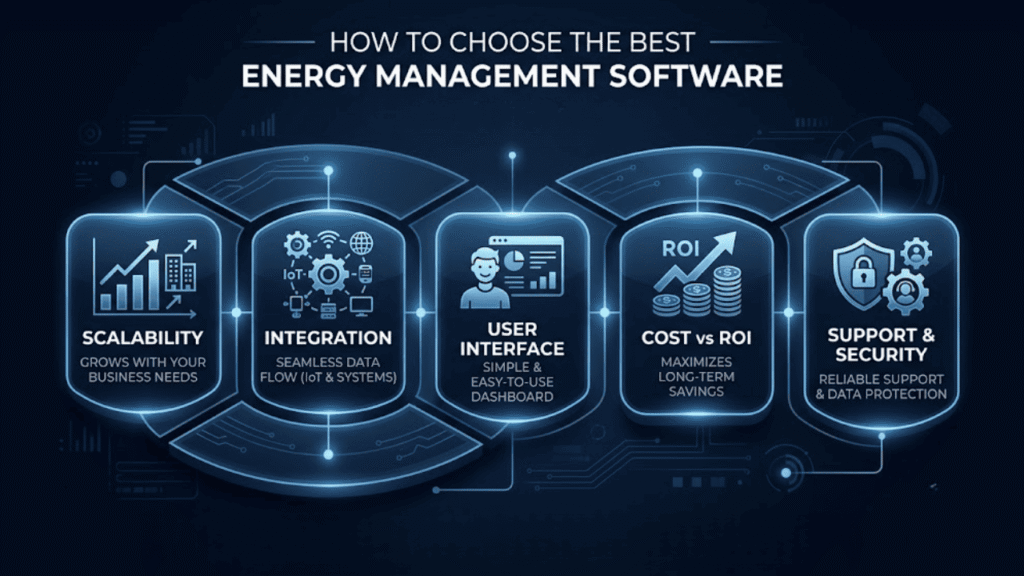
- Scalability: Ensure the software grows with your business needs
- Integration: Check compatibility with IoT devices and existing systems
- User Interface: Choose a simple and easy-to-use dashboard
- Cost vs ROI: Focus on long-term savings, not just initial cost
- Support & Security: Look for reliable vendor support and data protection
Example:
A manufacturing company selects scalable software with IoT integration, allowing them to expand monitoring across multiple plants.
| Factor | Why It Matters |
| Scalability | Supports business growth |
| Integration | Enables seamless data flow |
| Usability | Improves team productivity |
| ROI | Maximizes cost savings |
Choosing wisely ensures better performance, cost savings, and long-term value.
Challenges in Implementing Energy Management Software
Implementing Energy Management Software brings strong benefits, but businesses often face practical challenges during setup and adoption. Understanding these issues helps teams plan better and avoid costly mistakes.
Common Challenges:
- High Initial Investment: Businesses need to invest in software, sensors, and infrastructure
- Integration Issues: Connecting with existing systems and machines can take time
- Data Complexity: Large volumes of energy data can overwhelm teams without proper tools
- Employee Training: Staff need training to use dashboards and interpret data
- Data Security Risks: Protecting sensitive operational data becomes critical
Example:
A manufacturing company installs energy monitoring software but struggles to integrate it with legacy machines, delaying full implementation.
- Plan budget and ROI before implementation
- Choose scalable and compatible solutions
- Train teams for better adoption
Addressing these challenges ensures smoother implementation and long-term success.
Future Trends in Energy Management Software
Energy Management Software continues to evolve as businesses adopt smarter technologies and focus on sustainability. New trends help companies gain deeper insights and improve energy efficiency faster.
Key Future Trends:
- AI-Powered Analytics: Use artificial intelligence to predict energy usage and optimize consumption automatically
- IoT Integration: Connect more devices and sensors for real-time monitoring and control
- Automation & Smart Controls: Automatically adjust energy usage based on demand and conditions
- Sustainability Focus: Track carbon emissions and support green energy initiatives
- Cloud-Based Platforms: Enable remote access and scalable energy management solutions
Looking to reduce energy costs and improve operational efficiency? Explore Niraltek Solution’s Energy Management System to gain real-time insights, optimize energy usage, and achieve smarter, data-driven decisions for your business.
Conclusion
Energy Management Software has become essential for businesses aiming to reduce costs, improve efficiency, and achieve sustainability goals. It provides real-time insights, enables smarter decision-making, and helps organizations control energy usage effectively. From manufacturing plants to commercial buildings, businesses can optimize operations and minimize energy waste with the right solution.
By integrating with Industrial IoT and advanced analytics, energy management systems deliver long-term value and competitive advantage. Companies that invest in these technologies not only lower operational costs but also build a more sustainable and future-ready infrastructure.
Now is the right time to adopt energy management system and take control of your energy strategy with smarter, data-driven solutions.
Frequently Asked Questions (FAQs)
1. What is an energy management system?
An energy management system helps businesses monitor, control, and optimize energy usage in real time. It collects data from sensors and systems to improve efficiency and reduce costs.
2. How does this software work?
It connects with IoT devices, smart meters, and machines to collect energy data. The system analyzes this data and provides insights through dashboards for better decision-making.
3. What are the benefits of this solution?
- Reduce energy costs
- Improve operational efficiency
- Minimize energy waste
- Support sustainability goals
4. Which industries use energy management systems?
Industries like manufacturing, commercial buildings, data centers, and energy utilities use these systems to manage and optimize energy consumption.
5. Is this software expensive?
Initial costs may vary, but businesses often save up to 20% on energy expenses, making it a cost-effective long-term investment.