

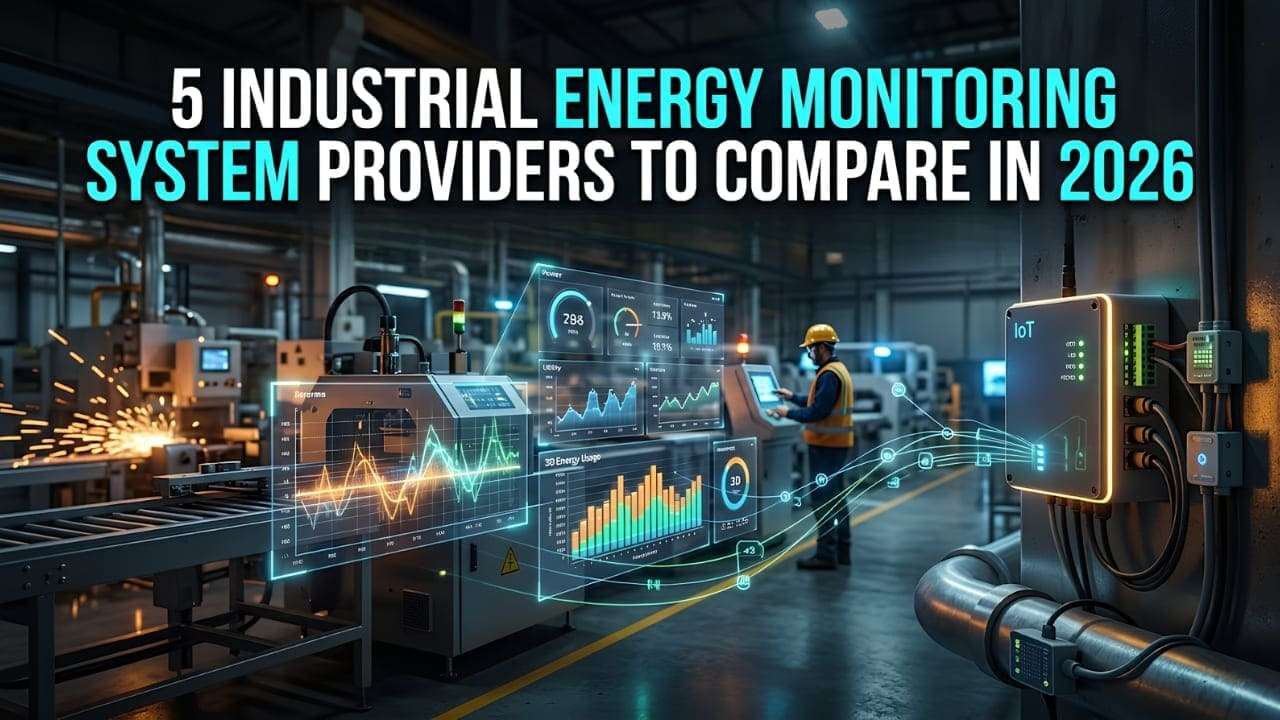
Rising electricity costs and hidden energy waste make it difficult for manufacturers to control operational expenses. An Industrial Energy Monitoring System helps businesses track energy consumption, identify unusual usage, and make informed decisions. According to the International Energy Agency (IEA), industry accounted for nearly 40% of global final energy demand in 2024, highlighting the importance of industrial energy efficiency.
When comparing providers, consider these essential factors:
- Real-time monitoring and energy analytics
- Equipment-level consumption tracking
- Integration with existing industrial systems
- Reporting, scalability, and technical support
What Is an Industrial Energy Monitoring System?
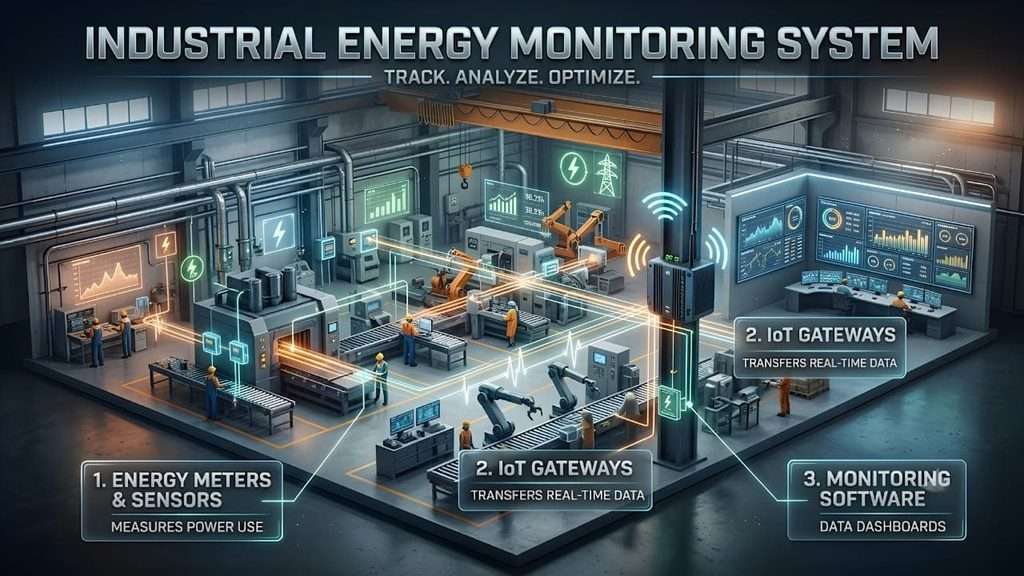
An Industrial Energy Monitoring System helps factories track, measure, and analyze electricity consumption across machines, production lines, and facilities. It uses energy meters, sensors, IoT gateways, and software dashboards to provide actionable insights into energy usage.
For example, a manufacturing plant can identify which machines consume the most electricity during production and investigate unusual consumption patterns.
Key capabilities include:
- Real-time monitoring: Track electricity usage and power demand.
- Equipment-level analysis: Identify energy-intensive machines.
- Automated reporting: Compare consumption across shifts and production periods.
- Alerts and analytics: Detect unusual energy usage and support timely action.
| Component | Purpose |
| Energy meters and sensors | Measure electrical parameters |
| IoT gateway | Transfers collected data |
| Monitoring software | Displays trends and reports |
Why Do Industries Need an Energy Monitoring System?
Industrial facilities often face rising electricity bills, hidden energy waste, and inconsistent machine performance. An Industrial Energy Monitoring System helps businesses understand where energy goes and identify opportunities to improve efficiency.
Here’s why industries benefit from energy monitoring:
- Identify energy waste: Detect machines that consume excessive electricity during operation or idle periods. For example, a factory can investigate a compressor that continues running after production ends.
- Control electricity costs: Track consumption patterns and demand peaks to help teams make better energy-use decisions.
- Improve operational efficiency: Compare energy consumption across machines, production lines, or shifts to identify unusual patterns.
- Support preventive maintenance: Monitor electrical parameters and investigate changes that may indicate equipment problems.
- Make data-driven decisions: Use dashboards and reports to evaluate energy performance and prioritize improvements.
For example, a manufacturing plant can compare electricity consumption with production output across different shifts. If one shift uses more energy to produce the same quantity of goods, the team can investigate equipment settings, idle time, and operating practices to identify potential improvements.
Key Features to Look for in an Industrial Energy Monitoring System
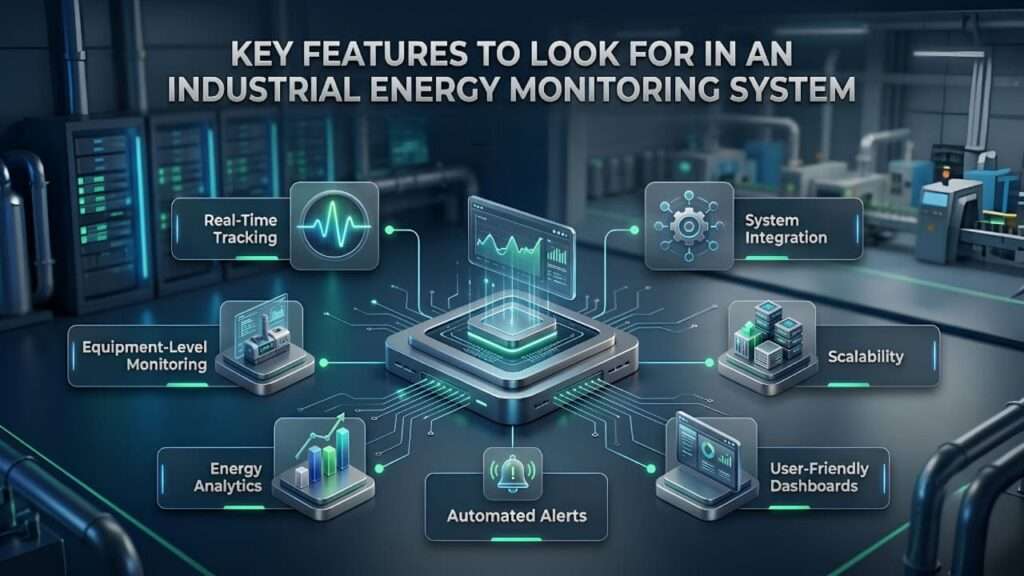
Choosing the right Industrial Energy Monitoring System helps industries track consumption, identify energy waste, and improve operational efficiency. Before selecting a provider, look for these essential features:
- Real-Time Energy Monitoring: Track electricity consumption as it happens. For example, operators can monitor power usage across production lines.
- Equipment-Level Monitoring: Identify machines that consume excessive energy and investigate unusual patterns.
- Energy Analytics and Reports: Compare consumption across shifts, machines, and production periods to identify improvement opportunities.
- Automated Alerts: Receive notifications when energy usage exceeds defined thresholds or shows unexpected changes.
- System Integration: Connect compatible energy meters, IoT gateways, and existing industrial systems for better visibility.
- Scalability: Choose a platform that can support additional machines, production lines, or factory locations as operations grow.
- User-Friendly Dashboards: Help teams understand energy data quickly and make informed decisions.
For example, a factory manager can use real-time dashboards and historical reports to investigate rising electricity consumption and prioritize corrective actions.
5 Industrial Energy Monitoring System Providers to Compare in 2026
Choosing an Industrial Energy Monitoring System provider depends on your facility’s energy consumption, equipment, integration requirements, and reporting needs. The five providers below offer different approaches to industrial energy monitoring, energy management, and energy data analysis. Compare their capabilities against your factory’s requirements before making a decision.
1. Niraltek Solutions
Niraltek Solutions offers smart energy management and monitoring through its DevsBot IoT platform. Its solutions help industrial facilities gain visibility into energy consumption and analyze usage patterns through monitoring dashboards and energy data.
Potential applications include tracking energy consumption across equipment, reviewing consumption trends, identifying unusual usage, and supporting data-driven energy management decisions. Confirm the specific meters, integrations, alerts, and reporting capabilities required for your facility with the Niraltek team.
Consider Niraltek if: Your factory needs an industrial-focused energy monitoring solution with IoT connectivity and visibility into energy consumption across equipment and facilities.
Website: Niraltek Solutions
2. Energyly
Energyly provides IoT-based energy monitoring solutions that combine monitoring devices with cloud dashboards and analytics. Its published offerings include machine-level energy monitoring, consumption analysis, alerts, and energy reporting.
These capabilities can help manufacturers examine equipment energy usage, compare consumption patterns, and investigate machines that use more electricity than expected. The available monitoring features depend on the equipment and configuration.
Consider Energyly if: You want to evaluate machine-level energy monitoring, connected devices, consumption reports, and alerts.
Website: Energyly
3. Zoho IoT
Zoho IoT provides an Industrial Internet of Things (IIoT) platform for connecting industrial equipment, collecting operational data, and monitoring assets and processes. Its industrial applications can help businesses bring equipment data together for analysis, dashboards, and operational insights.
For manufacturing facilities, evaluate how its machine monitoring, energy and utility data capabilities, device integrations, and analytics align with your energy monitoring requirements. Confirm which functions are available for your intended setup.
Consider Zoho IoT if: Your facility wants to evaluate an industrial IoT platform for connected equipment, machine monitoring, and energy-related data analysis.
Website: Zoho IoT Industrial IoT Solutions
4. Zerowatt
Zerowatt focuses on energy and operational intelligence for industrial facilities. Its platform is positioned around energy monitoring, analytics, equipment-related insights, and the use of industrial data to help teams identify potential inefficiencies.
For factories, these capabilities may support energy performance analysis and investigation of unusual operating patterns. Before selecting the platform, confirm which meters, industrial systems, data sources, and equipment monitoring functions are supported for your facility.
Consider Zerowatt if: You want to evaluate industrial energy analytics and operational insights alongside your energy monitoring requirements.
Website: Zerowatt
5. EnergyCAP
EnergyCAP specializes in energy and utility data management, including utility bill management, consumption analysis, facility benchmarking, and energy reporting. Its platform helps organizations consolidate utility information and evaluate energy use and costs across facilities.
This approach can be useful for manufacturers that need to track utility expenses, compare facility-level energy performance, and support energy reporting. If you require live machine-level monitoring, verify the available meter-data integrations and monitoring frequency before making a decision.
Consider EnergyCAP if: Your priority is utility data management, energy-cost analysis, benchmarking, and reporting across facilities.
Website: EnergyCAP
Industrial Energy Monitoring System Providers: Comparison Table
| Provider | Main area to evaluate | Questions to ask before choosing |
| Niraltek Solutions | Industrial energy monitoring and IoT-based energy management | Can it monitor your required machines, meters, and production areas? |
| Energyly | Machine-level monitoring, energy analytics, and alerts | Which electrical parameters, equipment types, and reporting intervals are supported? |
| Zoho IoT | Industrial IoT, connected equipment, and energy-related data analysis | Can it integrate with your existing equipment and energy monitoring systems? |
| Zerowatt | Industrial energy analytics and operational insights | Which industrial data sources and monitoring integrations are supported? |
| EnergyCAP | Utility data, energy-cost analysis, and reporting | Can it provide the meter-level data and reporting frequency your facility needs? |
Before selecting a provider, compare supported meters and communication protocols, monitoring frequency, machine-level visibility, integration requirements, implementation costs, scalability, reporting capabilities, and technical support. The best solution is the one that matches your facility’s operational requirements and energy management goals.
How to Choose the Right Industrial Energy Monitoring System Provider
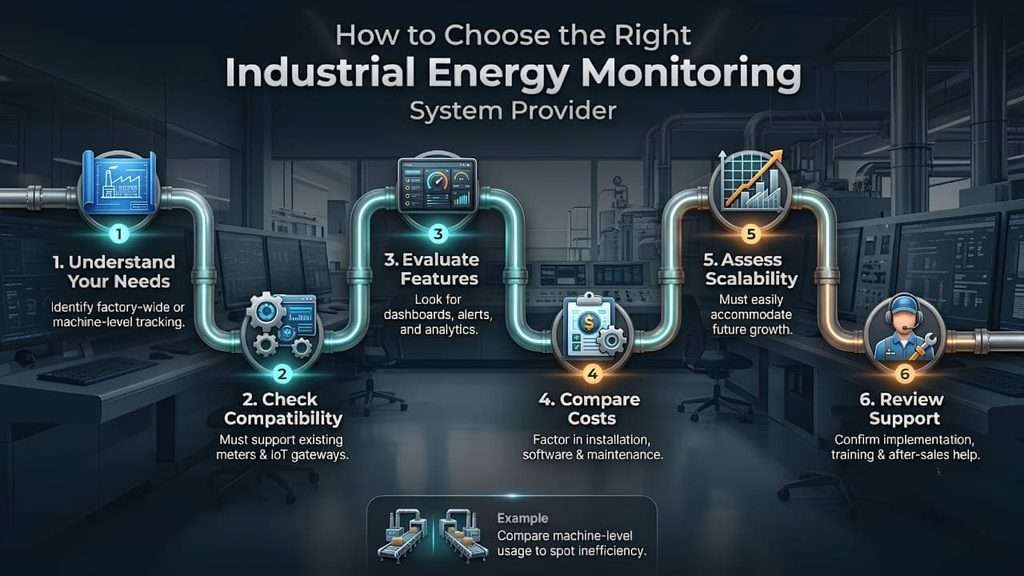
Selecting the right Industrial Energy Monitoring System provider helps your facility track energy consumption and improve operational efficiency. Before making a decision, consider these factors:
- Understand Your Requirements: Identify whether you need factory-wide monitoring, machine-level tracking, or multi-site reporting.
- Check System Compatibility: Ensure the provider supports your existing energy meters, IoT gateways, and industrial systems.
- Evaluate Monitoring Features: Look for real-time dashboards, energy analytics, automated alerts, and historical reports.
- Compare Costs: Consider installation, software subscriptions, integration, and ongoing maintenance expenses.
- Assess Scalability: Choose a solution that can accommodate additional machines or production facilities as your business grows.
- Review Technical Support: Check the provider’s implementation process, training, and after-sales assistance.
Example: If your factory operates several production lines, choose a provider that helps you compare energy consumption across individual machines and identify unusual usage.
Industrial Energy Monitoring Solutions From Niraltek
Niraltek provides an Industrial Energy Monitoring System that helps businesses gain better visibility into energy consumption and make informed operational decisions. By combining IoT technology, energy monitoring, and data analytics, industries can understand how their facilities use electricity and identify opportunities to improve efficiency.
Niraltek’s Industrial Energy Monitoring System can help industrial teams focus on key areas such as:
- Energy Consumption Tracking: Monitor electricity usage to understand consumption patterns across industrial operations.
- Real-Time Visibility: Use monitoring dashboards to review energy data and support timely decisions.
- Data-Driven Analysis: Examine consumption trends to identify unusual usage and investigate potential energy waste.
- Customized Monitoring: Explore solutions aligned with your facility’s equipment, monitoring requirements, and operational needs.
For example, a manufacturing facility can analyze energy consumption trends to identify machines that require further investigation.
Explore Niraltek’s Smart Energy Management solution to learn more about its capabilities and discuss your industrial energy monitoring requirements.
Conclusion:
An Industrial Energy Monitoring System helps manufacturers understand energy consumption, identify unusual usage, and make informed decisions about operational efficiency. By evaluating real-time monitoring, equipment-level tracking, energy analytics, system integration, and scalability, industries can choose a solution that aligns with their operational requirements.
When comparing providers in 2026, focus on practical capabilities, compatibility with existing equipment, technical support, and long-term business needs rather than choosing based on features alone.
Niraltek’s Smart Energy Management solution is worth exploring if your business is evaluating industrial energy monitoring options. Review its capabilities to determine whether they align with your facility’s energy management requirements.
Frequently Asked Questions
1. How does an energy monitoring system help a factory?
It helps factory teams understand where electricity goes, compare consumption across machines, and identify unusual usage. These insights help them investigate energy waste and make better operational decisions.
2. Can an energy monitoring system track individual machines?
Yes, if the facility uses compatible meters, sensors, and monitoring software. Machine-level tracking helps operators compare equipment consumption and identify machines that may need further investigation.
3. What features should businesses consider before choosing a provider?
Businesses should evaluate real-time monitoring, energy reports, alerts, equipment compatibility, data security, scalability, and technical support. The right features depend on the facility’s size and monitoring requirements.
4. Can small and medium-sized factories benefit from energy monitoring?
Yes. Smaller factories can start by monitoring major energy-consuming equipment or specific production areas. They can expand coverage as their operational requirements and budgets grow.
5. How much does an industrial energy monitoring system cost?
Costs vary depending on the number of meters, sensors, machines, software requirements, installation, and integrations. Businesses should request a quotation based on their facility’s needs and compare both initial and ongoing costs.