

When equipment or building systems develop abnormal conditions, operators need to know what happened and respond quickly. An alarm annunciator provides visual or audible indications that help identify these conditions before they become larger operational problems. However, too many alarms can make critical events harder to recognize.
- ISA identifies more than 10 alarms in 10 minutes as an alarm-flood condition that can stress operators.
- ISA recommends alarms provide the right indication at the right time so operators can take appropriate action.
- Modern alarm management therefore focuses on prioritizing meaningful alarms and supporting faster, more informed responses.
What Is an Alarm Annunciator?
An alarm annunciator is a device or interface that alerts operators when equipment or building systems detect an abnormal condition. It typically uses visual indicators, audible alerts, or digital displays to show what needs attention.
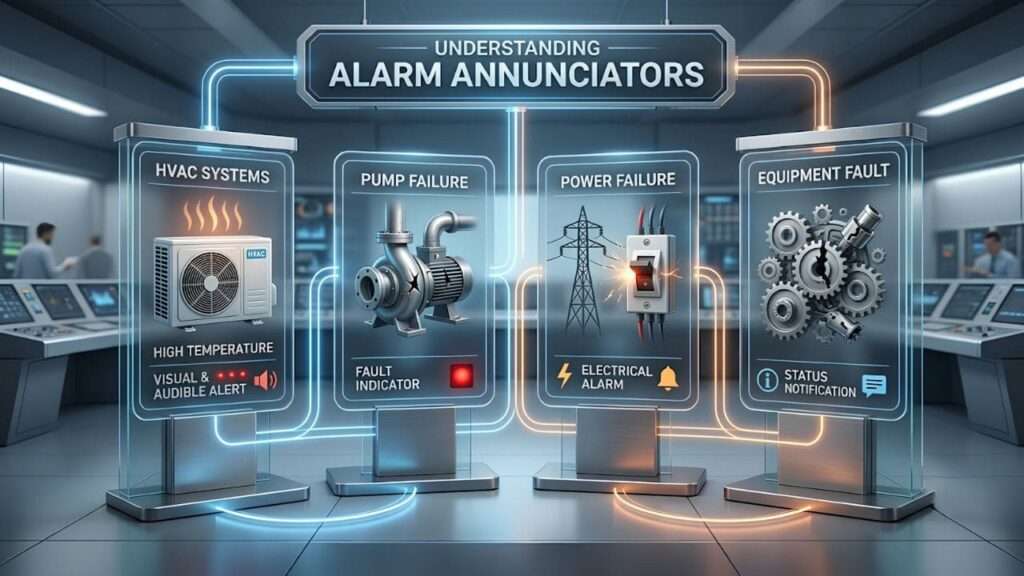
For example, if an HVAC system detects unusually high temperature, the alarm annunciator can display the affected equipment and trigger an audible warning.
| Alarm condition | Example indication |
| High temperature | Visual + audible alert |
| Pump failure | Fault indicator |
| Power failure | Electrical alarm |
| Equipment fault | Status notification |
What Does an Alarm Annunciator Do?
- Identifies abnormal operating conditions.
- Indicates the source or location of an alarm.
- Alerts operators through visual or audible signals.
- Supports alarm acknowledgement.
- Helps operators recognize conditions that need attention.
According to ISA, an alarm rate above 10 alarms in 10 minutes can indicate an alarm-flood condition. This highlights why clear alarm indication and prioritization matter in facilities with many connected systems.
In modern buildings, an annunciator can work alongside BMS, alarm monitoring, and alarm management systems to provide better visibility and faster response.
How Does an Alarm Annunciator Work?
The system follows a simple process: it detects an abnormal condition, receives the alarm signal, and alerts the operator so they can take action.
How the process works
- 1. Detects a condition: A sensor, controller, or connected equipment detects an issue.
- 2. Generates an alarm: The system sends an alarm signal when the condition crosses a defined limit.
- 3. Processes the signal: The annunciator identifies the alarm source and condition.
- 4. Alerts the operator: It uses visual indicators, audible alerts, or a digital display.
- 5. Operator acknowledges: The operator confirms that they have seen the alarm.
- 6. Condition gets resolved: The operator investigates the cause and takes corrective action.
What Are the Different Types of Alarm Annunciators?
These systems come in different forms depending on the facility, alarm volume, and monitoring requirements. Each type helps operators identify abnormal conditions and respond appropriately.
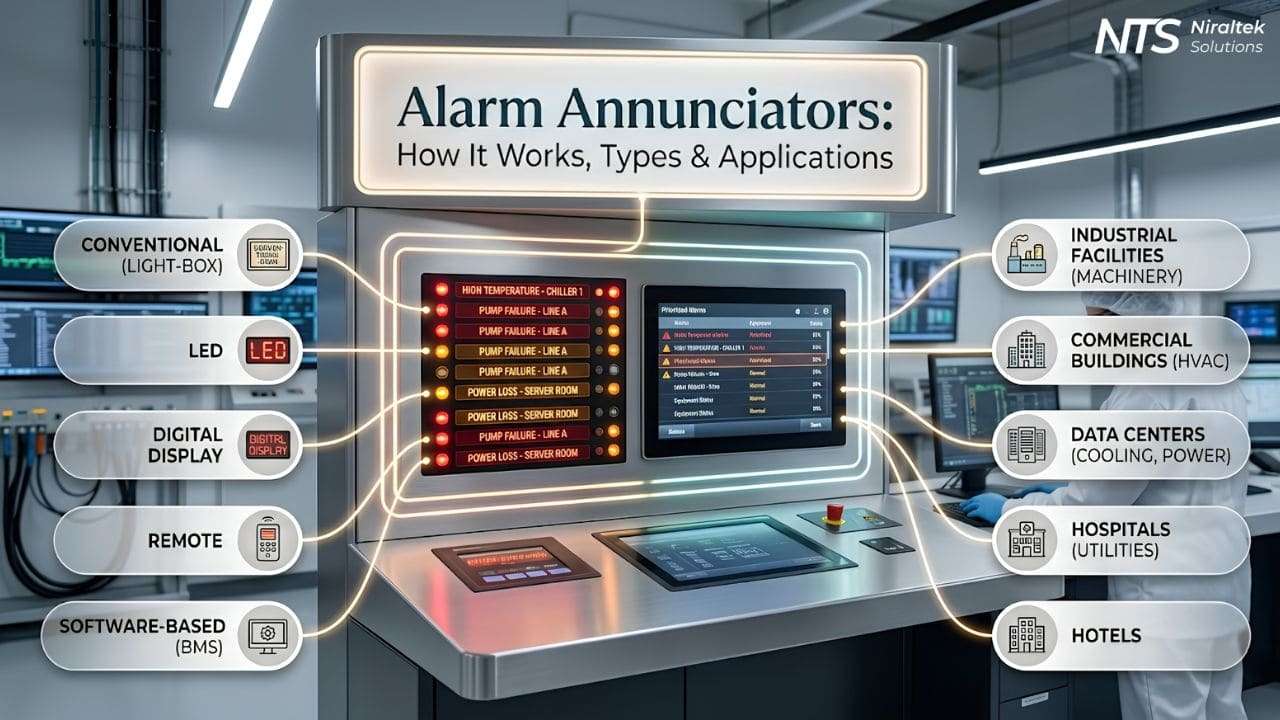
- Conventional Alarm Annunciator: Uses individual indicator lights or windows for specific alarm points.
- LED Annunciator: Uses LED indicators to provide clear, visible alarm status.
- Digital Annunciator: Displays alarm details such as equipment name, condition, and status on a digital screen.
- Remote Annunciator: Displays alarms at a location away from the equipment.
- Software-Based Annunciator: Displays alarms through a computer or web-based interface and can integrate with BMS and monitoring platforms.
For facilities with many connected systems and critical alarms, software-based solutions can provide greater visibility and support centralized alarm management.
What Information Does an Alarm Annunciator Provide?
The annunciator gives operators the information they need to understand an abnormal condition and decide what to check first. The exact information depends on the system, but most annunciators provide a combination of status, location, and alert details.
Key information can include:
- Alarm source: Identifies the equipment or system generating the alarm.
- Alarm condition: Shows what happened, such as high temperature, power failure, or equipment fault.
- Location: Indicates where the affected equipment or alarm point is located.
- Alarm status: Shows whether the alarm remains active, has been acknowledged, or has returned to normal.
- Visual indication: Uses lights, colors, symbols, or digital messages to highlight the condition.
- Audible alert: Uses a buzzer, horn, or similar signal to attract attention.
- Priority: Some systems identify critical, high, medium, or low-priority conditions.
Example: A chiller fault alarm might display the equipment name, fault condition, location, and current alarm status, helping the operator respond quickly.
Where Are Alarm Annunciators Used?
Alarm annunciators support facilities where operators need quick visibility into equipment faults, abnormal conditions, or critical events. They work across many building and industrial environments.
Common applications include:
- Commercial Buildings: Monitor HVAC, electrical systems, pumps, and other building equipment.
- Industrial Facilities: Alert operators about machinery faults, temperature changes, pressure issues, or process abnormalities.
- Manufacturing Plants: Indicate equipment failures, production-line faults, and utility problems.
- Data Centers: Monitor power supply, cooling equipment, UPS systems, and environmental conditions.
- Hospitals: Help monitor critical facility systems such as HVAC, power, medical utilities, and emergency equipment.
- Hotels: Provide alerts for HVAC, electrical, water, and other facility systems.
- Energy and Utility Facilities: Monitor generators, transformers, pumps, and power-related conditions.
- Warehouses and Cold Storage: Alert teams about temperature changes, refrigeration faults, and equipment failures.
What Are the Limitations of Traditional Alarm Annunciation?
Traditional alarm annunciation helps operators notice abnormal conditions, but it can become difficult to manage when a facility generates many alarms. Simply displaying an alarm does not always tell the operator which alarm needs attention first or who should respond.
Common limitations include:
- Too many notifications: Frequent alarms can overwhelm operators and create alarm fatigue.
- Limited prioritization: Basic annunciators may not clearly separate critical alarms from routine alerts.
- Delayed response: Operators may spend time identifying which alarm requires immediate action.
- Manual follow-up: Teams may need to contact responsible personnel manually.
- Limited escalation: Unacknowledged critical alarms may not automatically reach the next responsible person.
- Limited tracking: Basic systems may provide little information about acknowledgement and resolution.
- Disconnected systems: Alarms from different building systems may remain in separate interfaces.
Example: If an HVAC fault, power alarm, and critical equipment alarm appear together, an operator may struggle to identify which condition requires immediate attention. This is where modern alarm management systems can provide better prioritization and control.
Alarm Annunciator vs Alarm Management System: What Is the Difference?
An alarm annunciator primarily tells operators that an abnormal condition has occurred. An alarm management system goes further by helping teams prioritize, communicate, track, and resolve alarms.
| Feature | Alarm Annunciator | Alarm Management System |
| Alarm indication | ✓ | ✓ |
| Alarm prioritization | Limited | ✓ |
| Centralized monitoring | Depends on system | ✓ |
| Notifications | Basic | Advanced |
| Escalation | Limited | ✓ |
| Alarm history | Limited | ✓ |
| Resolution tracking | Limited | ✓ |
Key Difference
- Alarm annunciator: Alerts the operator about an event.
- Alarm management system: Helps determine what needs attention first, who should respond, and what happens if nobody responds.
- Modern systems: Can bring alarms from multiple building and facility systems into one interface.
How Modern Alarm Management Improves Critical Alarm Response
Modern alarm management goes beyond simply displaying an alarm. It helps operators identify critical conditions, prioritize them, notify the right people, and track the response. This matters when facilities generate large volumes of alarms. ISA considers more than 10 alarms in 10 minutes an alarm-flood condition, which can increase operator stress and make important alarms harder to distinguish.
A modern critical-alarm workflow
Identify → Prioritize → Notify → Acknowledge → Escalate → Resolve → Track
| Traditional approach | Modern alarm management |
| Displays alarms | Prioritizes critical alarms |
| Operator checks manually | Sends targeted notifications |
| Limited escalation | Escalates unresolved alarms |
| Basic acknowledgement | Tracks acknowledgement and response |
| Limited history | Maintains alarm history and audit trails |
Key improvements include:
- Critical prioritization: Helps operators focus on alarms that require immediate action.
- Smart notifications: Alerts the responsible person through configured channels.
- Escalation: Moves unresolved alarms to the next responsible person.
- Response tracking: Records acknowledgement and resolution activity.
- Alarm analytics: Helps identify recurring or nuisance alarms.
An alarm annunciator tells you when something goes wrong—but modern facilities need to know which alarm needs attention first and who should respond. Niraltek’s ARGUS BMS Alarm System helps prioritize critical alarms, notify the right people, escalate unresolved events, and track responses from one centralized platform.
Conclusion
An alarm annunciator plays an important role in helping operators identify abnormal conditions through clear visual and audible alerts. However, as buildings and facilities become more connected, simply displaying alarms may not be enough. High alarm volumes can make it difficult to identify which events require immediate attention.
Modern alarm management takes the process further by helping teams:
- Identify and prioritize critical alarms
- Notify the right personnel
- Acknowledge alarms quickly
- Escalate unresolved events
- Track alarm resolution
- Maintain historical records and audit trails
For facilities managing multiple systems and critical events, combining alarm annunciation with centralized alarm monitoring and management can improve visibility, response, and operational control. Niraltek’s ARGUS BMS Alarm System helps organizations move beyond basic alarm indication by providing a structured approach to managing critical alarms from detection through resolution.
Frequently Asked Questions
1. What is the main purpose of an alarm annunciator?
This system alerts operators when equipment or a building system detects an abnormal condition. It typically provides visual, audible, or digital indications so operators can identify the issue and take appropriate action.
2. How does an annunciator alert operators?
It can use indicator lights, audible signals, digital displays, or software interfaces. The exact method depends on the system design and the type of equipment being monitored.
3. What types of conditions can trigger an alarm?
Common examples include high temperature, equipment failure, power loss, pump faults, HVAC problems, pressure changes, and other conditions that exceed predefined operating limits.
4. Can an annunciator show which equipment has a problem?
Yes. Depending on the system, it can display information such as the affected equipment, alarm location, condition, and current status. This helps operators identify where they need to investigate.
5. What happens when a facility has too many alarms?
A large number of alarms can make it difficult for operators to identify urgent events. Critical notifications may get buried among routine alerts, leading to slower response and alarm fatigue. Prioritization and structured alarm management can help address this challenge.
6. Is an annunciator the same as an alarm management system?
No. An annunciator mainly indicates that an abnormal condition has occurred. An alarm management system can provide additional capabilities such as prioritization, notifications, escalation, response tracking, analytics, and historical records.
7. Can alarm systems be integrated with a BMS?
Yes. Alarm information can integrate with building management and automation platforms, allowing operators to view relevant equipment conditions from a centralized interface.
8. When should a facility consider advanced alarm management?
Facilities handling large numbers of alarms or multiple connected systems may benefit from advanced management when operators need better prioritization, escalation, accountability, and tracking of critical events.