

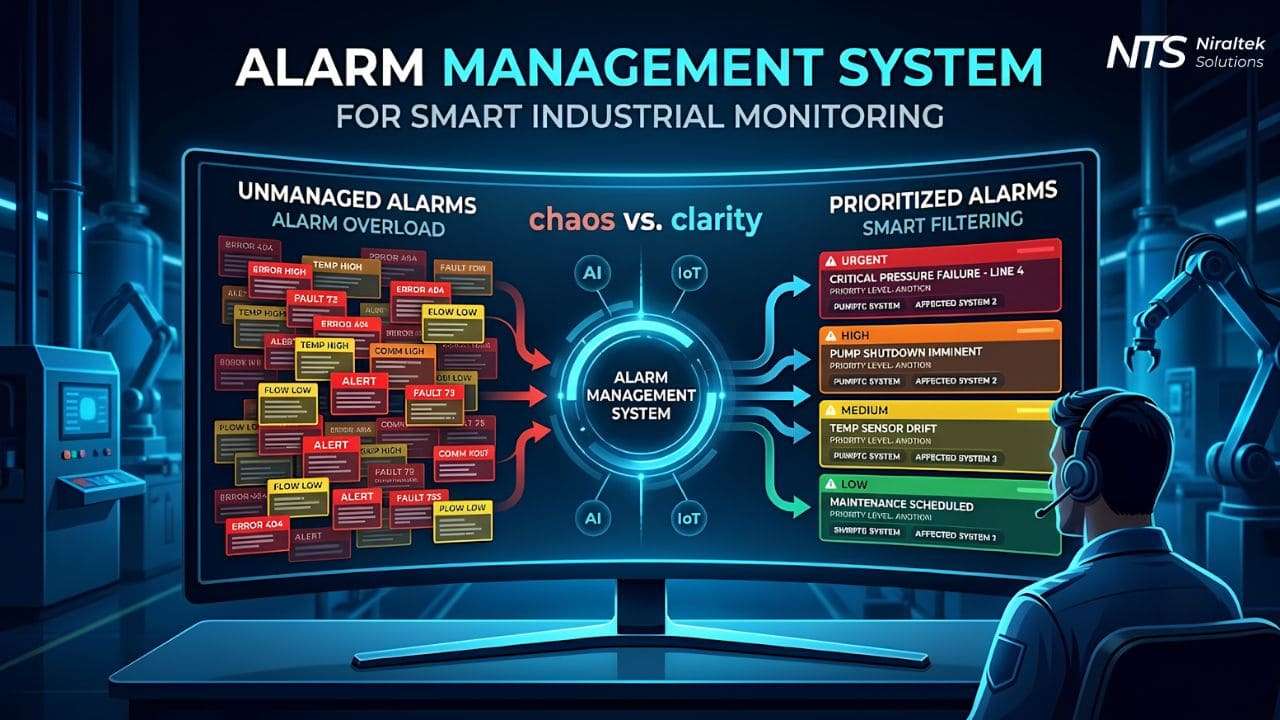
Industrial environments generate thousands of alerts every day, but many businesses struggle to manage them effectively. Poor alarm handling leads to delayed responses, safety risks, and operational inefficiencies. According to industry studies, up to 70–80% of alarms are unnecessary or low priority, causing alarm fatigue and reducing response effectiveness. This is where an Alarm Management System becomes essential.
This system helps organizations monitor, prioritize, and respond to alerts in real time, ensuring better control and faster decision-making.
Key challenges businesses face:
- Excessive and unfiltered alarms (alarm overload)
- Delayed response to critical events
- Lack of centralized alarm visibility
- Difficulty in meeting safety and compliance standards
By addressing these issues, a smart system improves safety, reduces downtime, and enables more efficient industrial operations.
Introduction to Alarm Management System
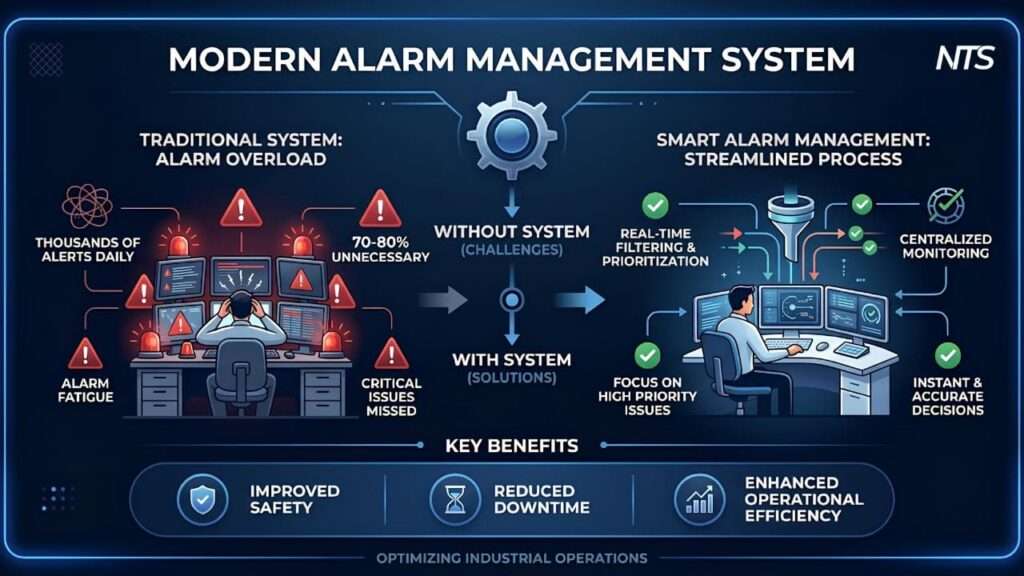
Modern industrial environments generate thousands of alerts every day, but not all alarms require immediate action. In fact, industry studies show that up to 70–80% of alarms are unnecessary or low priority, leading to alarm fatigue and delayed responses. This overload makes it difficult for operators to identify critical issues, increasing the risk of downtime and safety incidents. An Alarm Management System solves this problem by filtering, prioritizing, and managing alerts in real time.
Instead of reacting to every alert, businesses can focus on what truly matters. The system centralizes alarm data, improves visibility, and enables faster, more accurate decision-making.
Key Challenges Without a Proper System
- Excessive and unfiltered alarms
- Delayed response to critical events
- Lack of centralized monitoring
- Increased risk of human error
Example
A manufacturing plant receives hundreds of alerts daily. With this system, it filters non-critical alerts and highlights high-priority issues, allowing the team to respond instantly and avoid production loss.
Traditional vs Smart Alarm Management
| Feature | Traditional System | Alarm Management System |
| Alerts | Unfiltered | Prioritized |
| Monitoring | Manual | Real-time |
| Response | Delayed | Instant |
| Efficiency | Low | High |
By implementing this system, organizations can improve safety, reduce downtime, and enhance overall operational efficiency.
What is an Alarm Management System?
An Alarm Management System (AMS) helps industries monitor, control, and respond to alarms in a structured and efficient way. Instead of overwhelming operators with hundreds of alerts, it ensures that only meaningful and actionable alarms grab attention.
Think of it like a smart filter for your operations. In a factory or power plant, machines constantly generate signals. Without proper management, operators may miss critical issues because of too many unnecessary alarms.
Key Features of an Alarm Management System:
- Prioritization of alarms
Not all alarms matter equally. AMS ranks them based on urgency so operators focus on what truly needs action. - Alarm filtering and reduction
Removes duplicate or irrelevant alarms to avoid confusion. - Real-time monitoring
Tracks system performance continuously and alerts operators instantly. - Historical analysis
Stores alarm data for future analysis and improvement.
Example:
Imagine a manufacturing plant where temperature, pressure, and flow are monitored:
- If temperature rises slightly → low-priority alert
- If pressure exceeds safety limits → high-priority alarm requiring immediate action
Without AMS, both alerts might look the same, causing delays in response.
Why it matters:
- Prevents alarm overload
- Improves operator decision-making
- Enhances safety and compliance
- Reduces downtime and operational risks
In simple terms, this system turns chaos into clarity-helping teams act faster, smarter, and safer.
Key Features of an Alarm Management System
An effective system (AMS) does more than just trigger alerts it helps teams stay focused, respond quickly, and prevent costly mistakes. Here are the key features that make it powerful and practical.
- Alarm Prioritization
AMS assigns priority levels (high, medium, low) based on severity. - Alarm Rationalization
It reviews and removes unnecessary or duplicate alarms. - Real-Time Monitoring & Alerts
The system continuously tracks equipment and sends instant alerts when something goes wrong. - Alarm Shelving & Suppression
Operators can temporarily mute non-critical alarms during maintenance or known issues. - Historical Data & Reporting
AMS stores alarm data for analysis and improvement. - User-Friendly Dashboards
Clear dashboards help operators understand system status at a glance. - Integration with Control Systems
AMS connects with SCADA, PLCs, and other industrial systems for seamless operation. - These features work together to reduce alarm fatigue, improve response time, and keep operations safe and efficient.
Benefits of Using an Alarm Management System
This system delivers real, measurable benefits for industries that rely on continuous monitoring. It helps teams stay in control, reduce risks, and make faster decisions without confusion.
Here’s how it adds value:
- Reduces Alarm Overload
AMS filters out unnecessary alerts and highlights only critical ones. - Improves Response Time
Clear prioritization helps operators act immediately on urgent issues. - Enhances Safety
Early detection of critical problems helps prevent accidents and equipment failure. - Boosts Operational Efficiency
Teams spend less time sorting alarms and more time solving real problems. - Supports Better Decision-Making
Historical data and reports provide insights into recurring issues. - Ensures Compliance with Standards
AMS helps industries meet safety and regulatory requirements. - Minimizes Downtime and Costs
Faster response and better planning reduce unexpected shutdowns.
In short, this system turns reactive operations into proactive control-helping businesses run safer, smoother, and more efficiently.
Alarm Management System vs Traditional Alarm Systems
Many industries still rely on traditional alarm systems, but they often create more problems than they solve. This system takes a smarter, more structured approach and solves those limitations.
Let’s break down the key differences:
- Alarm Handling
Traditional systems trigger every alert without filtering. This floods operators with notifications.
AMS filters, prioritizes, and shows only relevant alarms. - Prioritization
Traditional systems treat most alarms equally. Operators struggle to identify urgency.
AMS assigns clear priority levels. - Operator Efficiency
Traditional setups confuse operators during critical situations.
AMS improves clarity and reduces stress. - Data & Insights
Traditional systems offer limited or no historical analysis.
AMS stores and analyzes alarm data for continuous improvement. - Flexibility & Control
Traditional systems lack features like alarm suppression or customization.
AMS allows shelving, filtering, and tuning of alarms. - Safety & Compliance
Traditional systems increase the risk of missed critical alarms.
AMS improves safety and supports industry standards.
In simple terms, traditional alarm systems react to everything, while this system focuses on what truly matters-helping teams work smarter, faster, and safer.
Common Use Cases of Alarm Management System
This system plays a critical role across many industries where real-time monitoring and quick decision-making matter. It helps teams stay alert, avoid risks, and maintain smooth operations.
Here are some common use cases where AMS delivers strong value:
- Manufacturing Plants
AMS monitors machines, temperature, pressure, and production lines. - Oil & Gas Industry
Operations involve high-risk environments with complex processes.
. - Power Generation & Utilities
Power plants require constant monitoring of turbines, boilers, and electrical systems. - Water & Wastewater Management
AMS tracks flow rates, pump status, and water levels. - Pharmaceutical & Chemical Industries
These industries depend on precise environmental conditions. - Smart Buildings & Facilities
AMS manages HVAC systems, fire alarms, and energy usage. - Data Centers
Continuous uptime is critical for IT infrastructure.
In simple terms, this solution fits anywhere that requires continuous monitoring, quick response, and high reliability-making operations safer and more efficient.
Role of IoT and AI in Alarm Management Systems
Modern Alarm Management Systems (AMS) become far more powerful when combined with IoT (Internet of Things) and Artificial Intelligence (AI). These technologies transform basic alert systems into smart, predictive, and highly efficient solutions.
Here’s how they make a difference:
- Real-Time Data Collection with IoT
IoT devices continuously collect data from sensors, machines, and equipment. - Predictive Maintenance with AI
AI analyzes patterns and predicts failures before they happen. - Smart Alarm Filtering
AI reduces false or repetitive alarms by understanding normal vs abnormal behavior. - Faster Decision-Making
AI provides recommendations along with alarms, helping operators act quickly. - Remote Monitoring & Control
IoT enables operators to monitor systems from anywhere using dashboards or mobile apps. - Continuous Learning & Improvement
AI systems learn from historical data and improve alarm accuracy over time.
In simple terms, IoT brings real-time visibility, and AI adds intelligence. Together, they turn these systems into proactive tools that prevent problems instead of just reacting.
How to Choose the Right Alarm Management System
Choosing the right Alarm Management System (AMS) can make a huge difference in safety, efficiency, and overall operations. Instead of picking the first option available, focus on what truly fits your industry needs and workflow.
Here are key factors to consider:
- Understand Your Requirements
Start by identifying what you need to monitor and control. - Check Integration Capabilities
Make sure the AMS connects easily with your existing systems like SCADA, PLCs, or IoT devices. - Look for Smart Alarm Features
Choose systems that offer prioritization, filtering, and alarm suppression. - Evaluate User Interface & Ease of Use
Operators should understand the system quickly without heavy training. - Consider Scalability
Your system should grow with your business.
- Focus on Analytics & Reporting
Choose a system that provides detailed reports and insights. - Check Compliance & Security
Ensure the system meets industry standards and keeps data secure.
In simple terms, the right system should fit your current needs, adapt to future growth, and help your team respond quickly and confidently.
Future Trends in Alarm Systems
Alarm Management Systems (AMS) continue to evolve as industries adopt smarter and more connected technologies. The future focuses on automation, intelligence, and faster decision-making, helping teams move from reactive responses to proactive control.
Here are the key trends shaping the future:
- AI-Driven Predictive Alarms
AI will not just detect problems—it will predict them in advance. - Integration with Industrial IoT (IIoT)
More devices will connect through IoT, creating a fully connected ecosystem. - Cloud-Based Alarm Management
Companies will shift from on-premise systems to cloud platforms for flexibility and remote access. - Advanced Analytics & Visualization
Systems will offer deeper insights through dashboards, graphs, and trend analysis. - Mobile & Remote Accessibility
Operators will receive alerts instantly on smartphones and wearable devices. - Cybersecurity Enhancements
As connectivity increases, systems will focus more on data protection and secure communication. - Self-Learning Systems
Future AMS will continuously learn and improve without manual tuning.
In simple terms, future systems will become smarter, faster, and more connected-helping industries prevent issues before they even happen.
Why Choose Niraltek Argus Alarm Management System
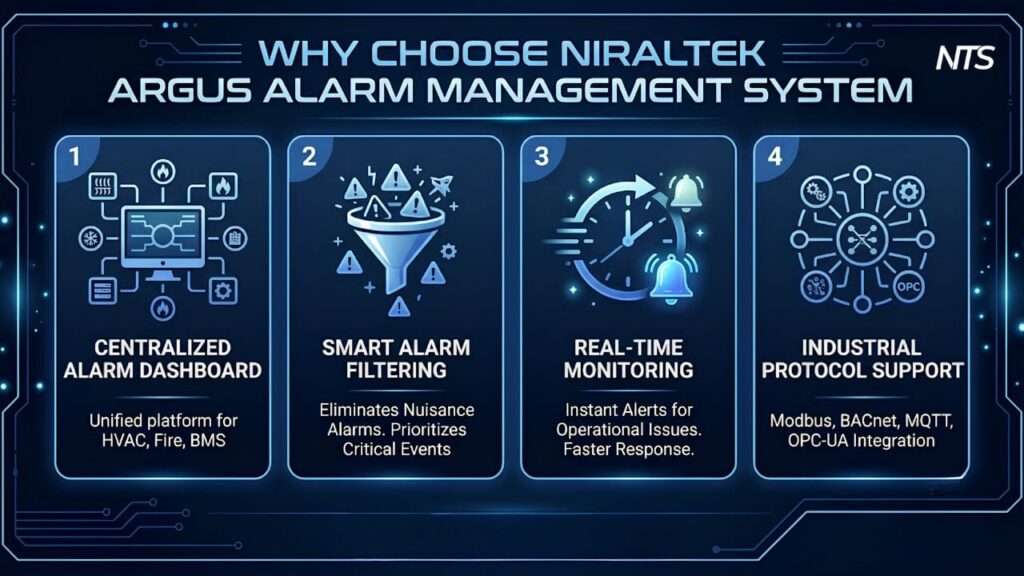
The Niraltek Argus Alarm Management System helps industries and smart buildings manage alarms intelligently instead of reacting to endless notifications. It centralizes alarms from HVAC, AHU, fire systems, and BMS platforms into one unified dashboard, helping operators respond faster and reduce alarm fatigue.
Here’s why businesses choose Argus:
- Centralized Alarm Governance
Argus combines multiple alarm sources into one platform. - Reduced Alarm Noise
The system filters duplicate and nuisance alarms so operators focus only on critical events. - Real-Time Monitoring & Faster Response
Argus delivers instant alerts for operational issues. - Industrial Protocol Support
The platform supports protocols like Modbus, BACnet, MQTT, and OPC-UA for seamless integration. - Scalable & Industry-Ready
Businesses across manufacturing, healthcare, smart buildings, and energy sectors can scale the system based on operational needs.
| Feature | Benefit | Example Use Case |
| Centralized Dashboard | One platform for all alarms | Building management systems |
| Real-Time Alerts | Faster issue resolution | HVAC failure detection |
| Alarm Prioritization | Reduced operator overload | Critical fire alarm handling |
| Protocol Integration | Easy deployment | SCADA/BMS connectivity |
| Historical Analytics | Better maintenance planning | Repeated fault analysis |
With intelligent monitoring, real-time visibility, and scalable integration, Niraltek Solutions positions Argus as a smart choice for organizations that want safer, faster, and more efficient alarm management.
Optimize your alarm management strategy with intelligent, real-time solutions from Niraltek.
Discover how Argus enhances operational efficiency and safety at https://niraltek.com/
Conclusion
An effective system transforms how industries handle critical events. Instead of reacting to overwhelming alerts, teams gain clarity, prioritize what matters, and respond with confidence. From reducing alarm fatigue to improving safety, efficiency, and compliance, AMS plays a key role in modern industrial operations.
As technologies like IoT and AI continue to evolve, alarm management will become even more intelligent and proactive. Businesses that adopt advanced solutions today position themselves for smoother operations, reduced downtime, and better decision-making in the future.
If you want to move beyond traditional alarm systems and take full control of your operations, now is the right time to upgrade. Explore how Niraltek Argus can help you streamline alarms, enhance visibility, and drive operational excellence at https://niraltek.com/.
FAQs (Frequently Asked Questions)
1. What is an Alarm Management System (AMS)?
An Alarm Management System helps monitor, filter, and prioritize alarms in real time so operators can respond quickly and effectively. It reduces unnecessary alerts and highlights only critical issues.
2. Why do industries need an Alarm Management System?
Industries handle thousands of signals daily. AMS reduces alarm overload, improves safety, and supports faster decision-making.
3. How does AMS improve operational efficiency?
AMS filters noise, prioritizes alerts, and provides clear insights. Teams fix problems faster instead of sorting alarms.
4. What is alarm fatigue, and how does AMS solve it?
Alarm fatigue occurs when operators receive too many alerts and start ignoring them. AMS reduces this by filtering and prioritizing only meaningful alarms.
5. Can Alarm Management Systems integrate with existing systems?
Yes, modern AMS integrates with SCADA, PLCs, BMS, and IoT devices for centralized monitoring.
6.What industries use these systems?
AMS is widely used in:
- Manufacturing
- Oil & Gas
- Power & Utilities
- Smart Buildings
- Data Centers
7. How do IoT and AI enhance these systems?
IoT collects real-time data, and AI analyzes patterns to predict issues early.
8. What should I consider when choosing an AMS?
Focus on:
- Alarm prioritization
- Real-time alerts
- Easy integration
- User-friendly interface
- Scalability
9. How does AMS help with safety and compliance?
AMS ensures critical alarms get immediate attention and supports industry safety standards.