

Fires remain one of the most critical risks for industries and commercial buildings, often causing severe damage, downtime, and safety hazards. According to the National Fire Protection Association (NFPA), fire incidents result in billions of dollars in losses every year due to delayed detection and response. Traditional fire systems rely on manual alerts, which can lead to missed or late actions.
A Fire Alarm Monitoring System solves this problem by providing real-time alerts, continuous monitoring, and faster emergency response.
Key challenges industries face:
- Delayed fire detection
- Lack of real-time monitoring
- High risk of equipment and asset damage
With a smart monitoring system, businesses can:
- Detect fire risks instantly
- Improve response time
- Enhance safety and compliance
This makes fire alarm monitoring an essential part of modern safety infrastructure.
What is a Fire Alarm Monitoring System?
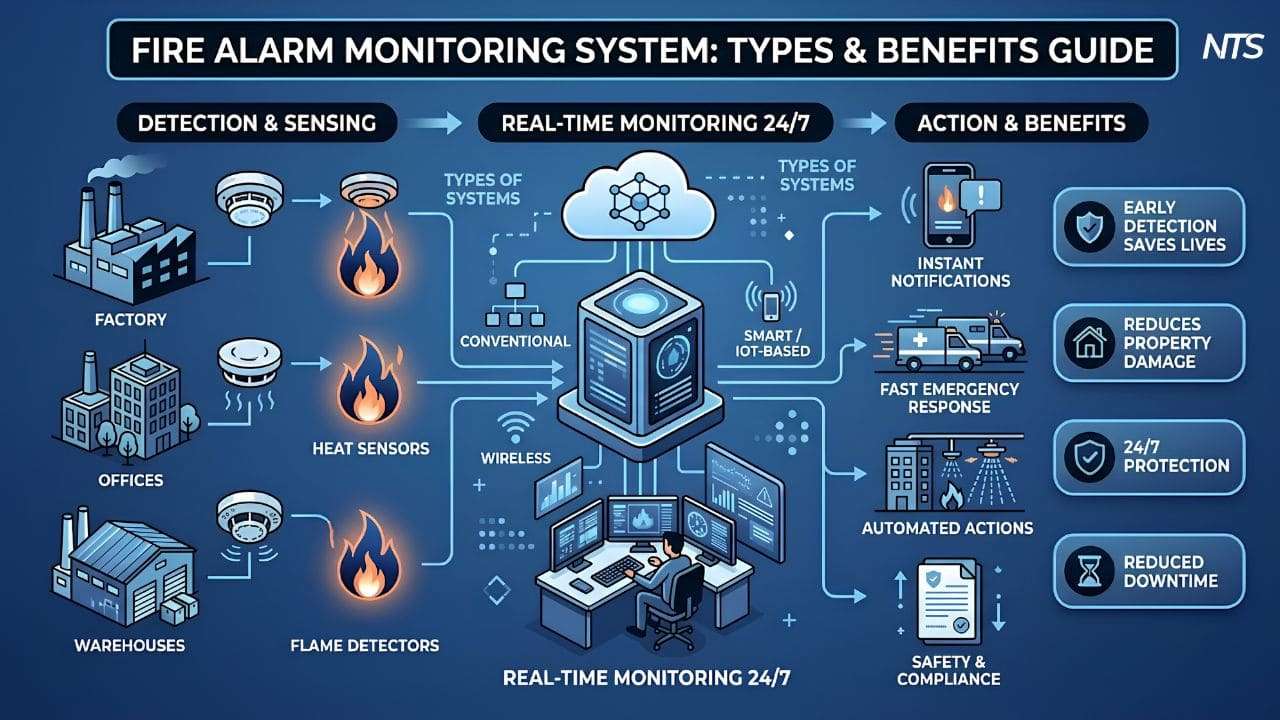
A fire alarm monitoring system detects fire hazards and sends real-time alerts to control rooms or emergency services. It helps reduce response time and improves safety.
This system helps you detect fire risks in real time and take immediate action before the situation becomes dangerous. Instead of relying on local alarms alone, this system sends alerts to operators, control rooms, or mobile devices instantly.
In simple terms, it acts like a smart safety guard that watches your facility 24/7.
How it works:
- Sensors detect smoke, heat, or fire
- System triggers an alert immediately
- Notifications reach the monitoring team
- Action is taken without delay
Key functions:
- Real-time fire detection
- Remote monitoring from anywhere
- Instant alerts and notifications
- Continuous system tracking
Why Fire Alarm Monitoring Systems Are Important
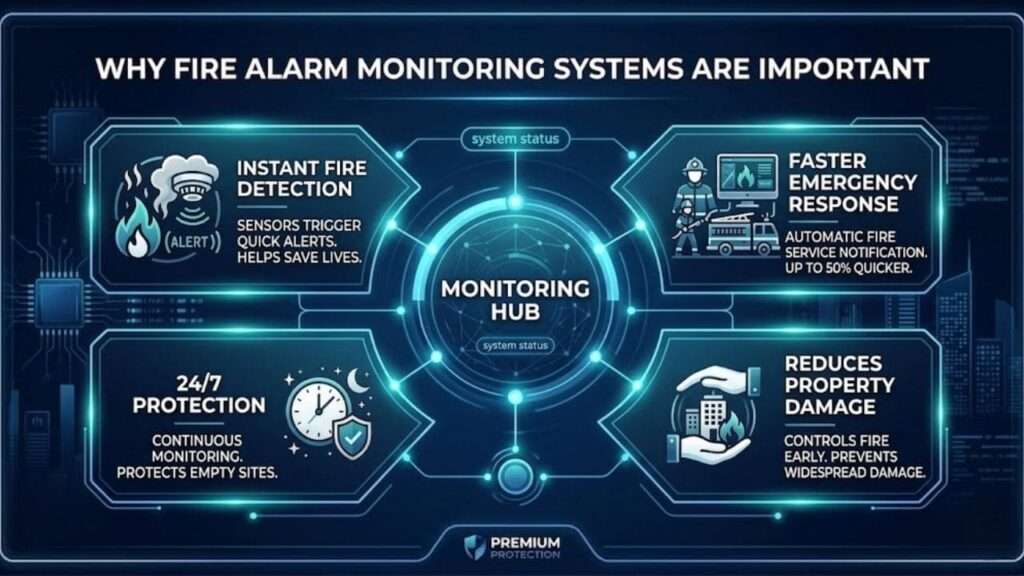
Fires spread in minutes, not hours—so response time matters most. A fire alarm monitoring system ensures instant alerts and faster action, which can reduce damage by up to 60%.
Key Reasons
- Early Detection Saves Lives
Sensors trigger alerts instantly. - Faster Emergency Response (up to 50% quicker)
Systems alert fire services automatically. - Reduces Property Damage
Quick action controls fire before it spreads. - 24/7 Protection
Works even when no one is on-site.
Quick Comparison
| Factor | Without Monitoring | With Monitoring |
| Response Time | Delayed | Instant |
| Safety | Medium | High |
| Damage | High | Low |
Types of Fire Alarm Monitoring Systems
Not all fire monitoring systems work the same way. Each type fits different building sizes, budgets, and safety needs.
Common Types
- Conventional Fire Alarm System
Divides a building into zones and sends alerts based on the zone. - Addressable Fire Alarm System
Pinpoints the exact device (sensor) that triggers the alarm.
- Wireless Fire Alarm System
Uses wireless signals instead of cables, making installation easy.
- Smart / IoT-Based Monitoring System
Connects to cloud platforms and sends real-time mobile alerts.
How a Fire Alarm Monitoring System Works
A fire monitoring system detects danger and instantly alerts the right people-before things get worse. Here’s how it works in simple terms:
- Detection starts the process
Sensors identify smoke, heat, or gas. - Control panel processes the signal
The fire alarm control panel (FACP) receives the alert and verifies it. - Signal reaches monitoring center
The system sends data through phone lines, internet, or radio signals to a 24/7 monitoring station. - Instant alert and action
Operators check the alert and notify emergency services.
On-site alarms activate
Sirens, strobes, or voice alarms warn people to evacuate immediately. - Optional integrations improve response
Systems can trigger sprinklers, unlock exits, or shut down machinery.
This fast, automated chain reduces response time and protects lives and property efficiently.
Key Features of a Fire Alarm Monitoring System
A smart fire monitoring system offers advanced features that help you detect risks early and respond quickly. It goes beyond basic alarms and gives you full control over fire safety.
Core Features:
Real-Time Alerts
- Get instant notifications when smoke or heat is detected
- Alerts reach control rooms, mobiles, or dashboards
Example: A server room fire triggers an alert within seconds
Remote Monitoring
- Track systems from anywhere using web or mobile
- Monitor multiple locations from one platform
Example: Facility managers can check fire status across different buildings
24/7 Continuous Monitoring
- System runs all the time without interruption
- Ensures no fire risk goes unnoticed
Integration with BMS/IoT
- Connect with Building Management Systems
- Automate safety actions
Data Logging & Reports
- Store alarm data for analysis
- Improve safety planning
Benefits of Fire Alarm Monitoring System
This system helps you detect risks early and take action quickly. It improves safety, reduces damage, and keeps your operations running smoothly.
Key Benefits:
Faster Emergency Response
- Get instant alerts when fire is detected
- Take action without delay
Improved Safety for People & Assets
- Protect employees, equipment, and infrastructure
- Reduce risk of major accidents
24/7 Monitoring & Control
- Monitor systems continuously
- Avoid missing critical alerts
Reduced Downtime & Losses
- Detect issues early
- Prevent production shutdowns
Better Compliance & Reporting
- Maintain safety standards
- Track alarm history for audits
These benefits make fire alarm monitoring a must-have for modern industries and buildings.
Use Cases Across Industries
A Fire Alarm Monitoring System plays a critical role across industries by improving safety and enabling faster response. Different environments face different fire risks, so real-time monitoring becomes essential.
Key Use Cases:
Manufacturing Plants
- Monitor machinery and production lines
- Detect overheating or electrical faults
Commercial Buildings
- Protect offices, server rooms, and common areas
- Ensure employee safety
Warehouses & Logistics
- Safeguard inventory and storage areas
- Prevent large financial losses
Hospitals & Healthcare
- Monitor critical zones 24/7
- Ensure patient safety
Data Centers
- Protect IT infrastructure
- Avoid downtime and data loss
These use cases show how fire alarm monitoring helps industries act faster and stay protected.
Fire Alarm Monitoring System vs Traditional Fire Systems
Choosing between modern monitoring and traditional systems can change how quickly you respond to emergencies. Here’s a clear comparison:
Fire Alarm Monitoring System (Smart & Connected):
- Sends real-time alerts to control rooms or mobile apps
- Enables remote monitoring across multiple locations
- Integrates with IoT devices for smarter detection
Traditional Fire Systems (Basic & Manual):
- Relies on local alarms only (sirens, bells)
- Needs on-site staff to notice and act
- Offers limited or no remote access
Key Difference:
- Monitoring systems focus on speed + automation
- Traditional systems depend on human response time
In high-risk environments like industries or large buildings, a monitoring system gives faster, more reliable protection.
Integration with BMS & IoT Systems
Modern fire alarm monitoring systems become far more powerful when you connect them with Building Management Systems (BMS) and IoT technologies. This integration improves visibility, control, and response time.
How integration adds value:
- Centralized control: Monitor fire alarms, HVAC, lighting, and security from one dashboard
- Automated actions: Trigger systems instantly during emergencies
- Real-time data insights: Track device status, alerts, and performance
Key examples:
- When smoke is detected, the system automatically shuts down HVAC to stop smoke spread
- IoT sensors detect heat spikes and send instant alerts to mobile apps
- BMS triggers emergency lighting and unlocks exit doors for safe evacuation
Why it matters:
- Reduces manual intervention
- Speeds up emergency response
- Improves overall building safety
By combining fire systems with BMS and IoT, you create a smart, responsive environment that acts instantly when every second counts.
Role of AI & Smart Technology in Fire Monitoring
AI and smart technologies are transforming fire monitoring from reactive to proactive. They don’t just detect fires-they predict risks and act faster.
How AI improves fire monitoring:
- Early detection: AI analyzes smoke patterns, heat changes, and video feeds in real time
- False alarm reduction: Smart systems filter dust, steam, or minor heat fluctuations
- Predictive maintenance: Detect faulty sensors before they fail
Real-world examples:
- AI-powered cameras identify smoke in a warehouse before flames appear
- Smart sensors send alerts to mobile apps and notify emergency teams instantly
- Systems analyze historical data to predict high-risk zones in factories
Why it matters:
- Speeds up response time
- Reduces human error
- Improves overall safety and reliability
With AI and smart tech, fire monitoring becomes intelligent, fast, and highly accurate-helping businesses prevent disasters instead of just reacting to them.
How to Choose the Right Fire Monitoring Solution
Choosing the right solution ensures better safety and faster response.You should focus on features that match your facility needs and risk level.
Key Factors to Consider:
Real-Time Alerts
- Choose a system that sends instant notifications
Example: Smoke detection triggers alerts on mobile and control room
Remote Monitoring
- Monitor multiple locations from one dashboard
- Useful for large industries or buildings
Integration Capability
- Check if it connects with BMS or IoT systems
- Improves automation and control
Scalability
- Select a system that grows with your business
User-Friendly Interface
- Easy dashboards help teams respond quickly
Compliance & Safety Standards
- Ensure the system meets fire safety regulations
Choosing the right system helps you improve safety, reduce risks, and respond faster during emergencies.
Future Trends in Fire Alarm Monitoring Systems
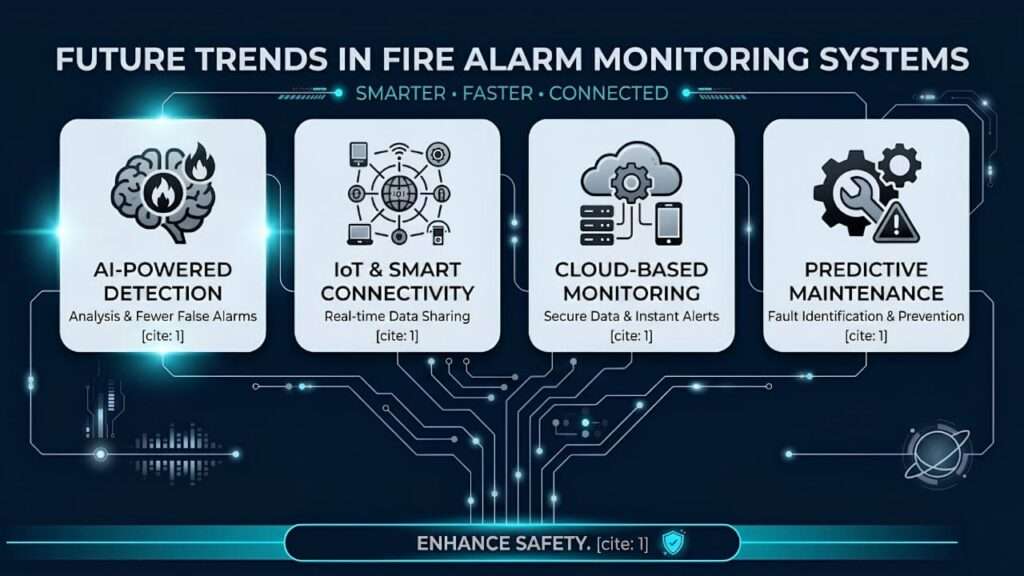
Fire safety is getting smarter, faster, and more connected. Modern systems now use advanced tech to improve detection and response by 30–50% faster than traditional setups.
Key Trends to Watch
- AI-Powered Detection
Systems analyze patterns and reduce false alarms. - IoT & Smart Connectivity
Devices connect and share real-time data. - Cloud-Based Monitoring
Stores data securely and sends instant alerts anywhere. - Predictive Maintenance
Systems identify faults before failure.
Trend Comparison
| Feature | Traditional Systems | Future Systems |
| Detection Speed | Standard | Faster (AI-driven) |
| Alerts | Local only | Remote + Mobile |
| Maintenance | Manual | Predictive |
| Integration | Limited | Smart ecosystem ready |
Protect your people and assets with a smart Fire Alarm Monitoring System. Explore our solution to enhance safety and response time today.
Conclusion
Fire risks don’t give warnings-but the right system does. A fire alarm monitoring system goes beyond basic detection by delivering real-time alerts, faster emergency response, and 24/7 protection. From residential buildings to large industrial setups, it helps you reduce damage, save lives, and stay compliant with safety standards.
As technology evolves, modern systems now integrate AI, IoT, and cloud monitoring, making fire safety smarter and more proactive than ever. Instead of reacting to fire incidents, you can now predict, prevent, and respond instantly.
The real question isn’t whether you need a alarm monitoring system-it’s how advanced your current system is.
If you want to upgrade your fire safety strategy, now is the right time to invest in a smarter solution. Explore how a modern monitoring system can protect what matters most and give you complete peace of mind.
Frequently Asked Questions (FAQs)
1. What is a Fire Alarm Monitoring System?
A fire alarm monitoring system detects fire hazards and instantly sends alerts to a monitoring center or emergency services for quick action.
2. How does this system work?
It uses sensors (smoke, heat, gas) to detect fire, sends signals to a control panel, and triggers alerts to responders or users in real time.
3. What is the difference between monitored and unmonitored fire alarms?
Monitored systems: Automatically notify emergency services
Unmonitored systems: Require manual action after the alarm sounds
4. Are these systems mandatory?
Yes, many commercial buildings, factories, and hospitals must install monitored solutions to meet fire safety regulations.
5. Can fire alarm systems connect with mobile devices?
Yes, modern systems send real-time alerts, notifications, and updates directly to smartphones or dashboards.
6. How much does it cost?
Costs vary based on system type, building size, and features. Basic setups cost less, while smart IoT-based solutions require higher investment.
7. How often should fire alarm systems be tested?
You should test them monthly and schedule professional inspections at least once a year.
8. Can these systems reduce false alarms?
Yes, advanced solutions use AI and smart sensors to filter false triggers like steam or dust.