

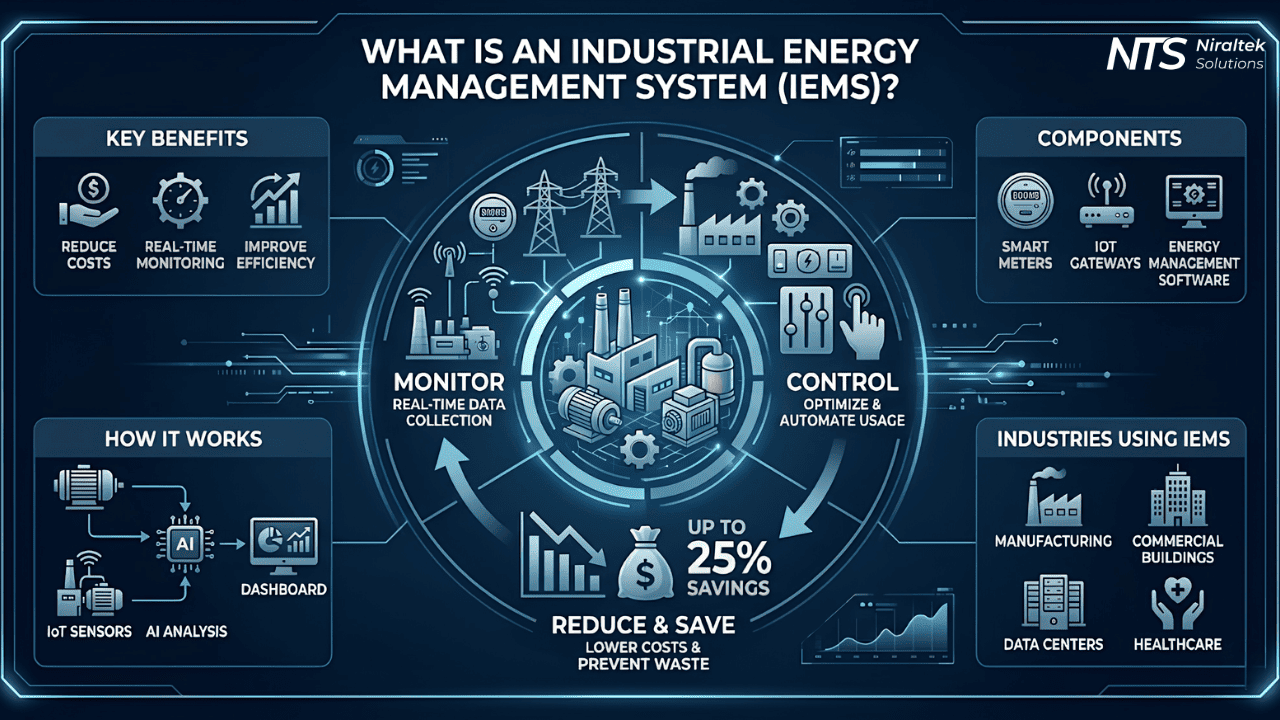
Industrial energy costs are rising rapidly, with studies showing that energy can account for up to 30–40% of total operational expenses in manufacturing industries (International Energy Agency). Many industries still lack visibility into real-time consumption, leading to energy waste and inefficiencies. An Industrial Energy Management System (IEMS) solves this by enabling smart monitoring, control, and optimization.
• Reduce energy costs by up to 20-25%
• Monitor electricity, gas, and water in real time
• Detect inefficiencies and prevent energy loss
• Improve sustainability and reduce carbon emissions
This system transforms raw energy data into actionable insights, helping industries operate smarter and more efficiently.
What is an Industrial Energy Management System?
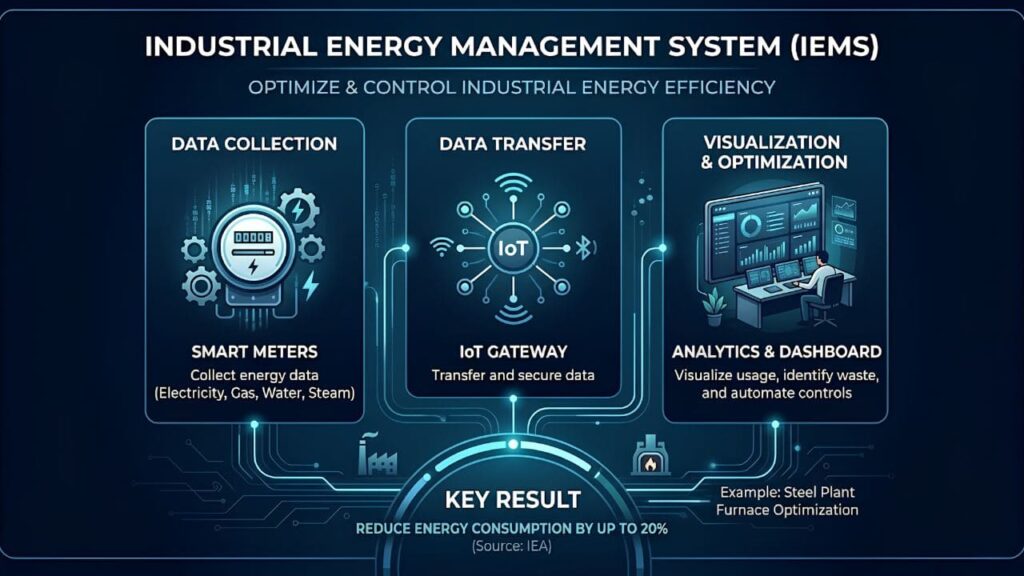
An Industrial Energy Management System (IEMS) helps industries monitor, control, and optimize energy usage in real time. It collects data from meters, sensors, and machines, then converts it into actionable insights. According to the International Energy Agency, industries can reduce energy consumption by up to 20% using smart systems.
• Tracks electricity, gas, water, and steam usage
• Identifies energy waste instantly
• Automates control for better efficiency
Example: A steel plant uses IEMS to monitor furnace energy, reducing peak demand costs.
| Component | Function |
| Smart Meters | Collect energy data |
| IoT Gateway | Transfer data |
| Dashboard | Visualize and analyze usage |
Key Components of an Energy Management System
An energy management system combines hardware and software to track and optimize energy use. Each component plays a specific role in delivering real-time insights and control.
• Smart Meters: Measure electricity, gas, and water usage
• Sensors: Capture machine-level energy data
• IoT Gateway: Connect devices and transfer data to the cloud
• Energy Management Software: Analyze data and detect inefficiencies
• Dashboard: Display real-time energy usage and reports
Example: A manufacturing unit uses smart meters and dashboards to monitor machines and quickly reduce energy waste during peak hours.
Benefits of Industrial Energy Management System
An industrial energy management system helps industries cut costs and improve efficiency with real-time insights. It gives full control over energy usage and reduces waste quickly.
• Reduce Energy Costs: Save up to 20–30% by identifying wastage
• Real-Time Monitoring: Track energy usage across machines instantly
• Improve Efficiency: Optimize operations and avoid peak demand charges
• Prevent Downtime: Detect issues early with smart alerts
• Support Sustainability: Lower carbon emissions and meet compliance goals
Example: A cement factory used an energy management system to monitor equipment and reduced electricity bills by 25% within months.
Real-Time Energy Monitoring – Why It Matters
Real-time energy monitoring helps industries track power usage instantly and take quick action. It gives clear visibility into where energy gets wasted and helps teams optimize operations without delays.
• Detect energy spikes and prevent costly peak demand charges
• Identify inefficient machines and reduce energy waste
• Track usage across departments and improve accountability
• Get instant alerts for abnormal consumption
Example: A textile factory noticed sudden energy spikes in one unit. With real-time monitoring, they fixed a faulty motor and reduced energy costs within days. This approach improves efficiency, saves money, and supports smarter decision-making.
How IoT and AI Improve Energy Management
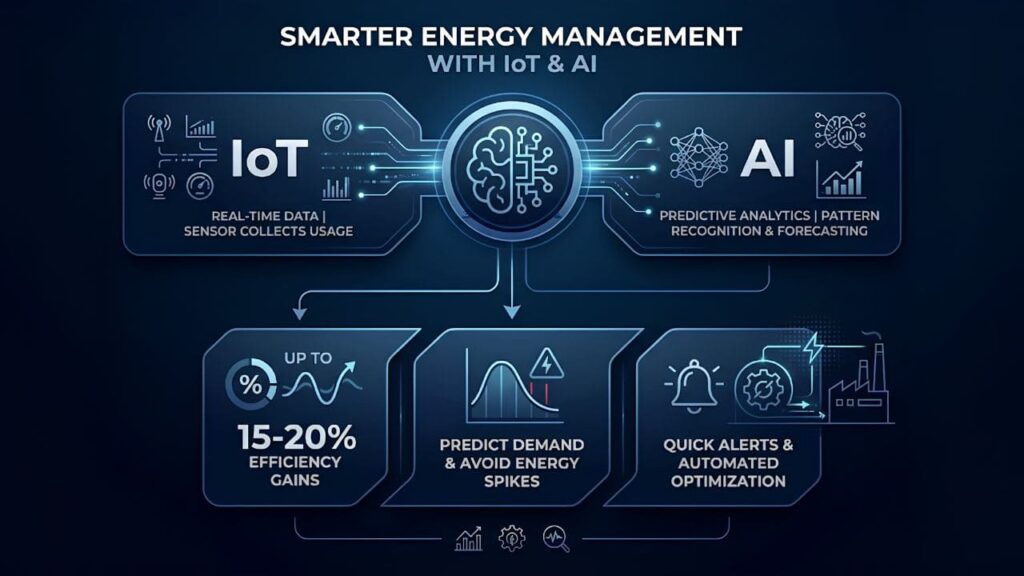
IoT and AI make energy management smarter by delivering real-time data and predictive insights. IoT devices collect energy data, while AI analyzes patterns and suggests actions. Studies show AI-driven systems can improve energy efficiency by up to 15–20%.
• IoT sensors track machine-level energy usage instantly
• AI predicts demand and prevents energy spikes
• Smart alerts help teams act quickly
• Automation reduces manual monitoring
Example: A factory uses IoT sensors to track machines, while AI predicts peak loads and avoids extra charges.
| Technology | Role |
| IoT | Collects real-time data |
| AI | Analyzes and predicts usage |
Industries That Use Energy Management Systems
Many industries rely on Energy Management Systems (EMS) to control costs and improve efficiency. Here are some key sectors:
Manufacturing: Tracks machine energy use and reduces waste.
Commercial Buildings: Manages lighting, HVAC, and power usage.
Healthcare: Ensures stable power for critical equipment.
Data Centers: Controls cooling and power loads.
Agriculture: Optimizes irrigation and storage systems.
How to Choose the Best Energy Management System
Choosing the right energy management system depends on your industry needs and scalability. Focus on features that deliver real-time insights and long-term savings.
• Look for real-time monitoring and detailed analytics
• Ensure easy integration with existing systems (ERP, SCADA)
• Choose a scalable solution for future expansion
• Check user-friendly dashboards and reporting tools
• Evaluate ROI instead of just initial cost
Energy Management System in India
India’s industries face rising energy costs and strict efficiency regulations, driving demand for smart energy management systems. Many sectors now adopt digital solutions to monitor and reduce energy usage.
• Manufacturing plants use IEMS to cut electricity costs and improve efficiency
• Cold storage units track energy to maintain temperature and reduce waste
• Smart buildings optimize power usage with real-time monitoring
• Government initiatives promote energy efficiency and sustainability
Future of Industrial Energy Management System
Industrial Energy management systems will become smarter, faster, and more automated with advanced technologies. Industries will rely more on AI, IoT, and renewable integration to optimize energy usage.
• AI will predict energy demand and prevent wastage
• IoT devices will provide deeper real-time insights
• Smart grids will balance energy supply and demand
• Renewable energy integration will reduce dependency on fossil fuels
• Automation will control systems without manual intervention
Want to see how a smart system works in real industries? Explore Niraltek’s energy solution to understand how you can monitor and optimize energy in real time.
Conclusion
An Industrial Energy Management System gives industries the power to understand, control, and optimize energy usage with precision. Instead of guessing, businesses can rely on real-time data, smart analytics, and automation to reduce costs and improve efficiency. From monitoring machines to predicting energy demand, these systems turn complex data into simple actions.
• Cut energy costs and eliminate waste
• Improve operational efficiency with real-time insights
• Support sustainability and compliance goals
As energy prices rise and competition increases, adopting a smart Energy Management System becomes a strategic advantage. Industries that invest today will lead with efficiency, sustainability, and long-term growth.
Frequently Asked Questions (FAQs)
1. What is an industrial energy management system?
An industrial energy management system helps industries monitor, control, and optimize energy usage in real time to reduce costs and improve efficiency.
2. How does an energy management system reduce energy costs?
It identifies energy waste, tracks real-time usage, and provides insights to optimize operations, helping industries save up to 20–30% on energy bills.
3. What industries use energy management systems?
Manufacturing, cold storage, hospitals, data centers, and smart buildings widely use these systems to improve efficiency and reduce energy consumption.
4. What is the role of IoT in energy management?
IoT devices collect real-time energy data from machines and systems, enabling better monitoring and faster decision-making.
5. How much does an industrial energy management system cost?
Costs vary based on features and scale, but most systems deliver strong ROI through energy savings and efficiency improvements.
6. What is the difference between EMS and BMS?
An Energy Management System (EMS) focuses on energy optimization, while a Building Management System (BMS) controls overall building operations like HVAC and lighting.