

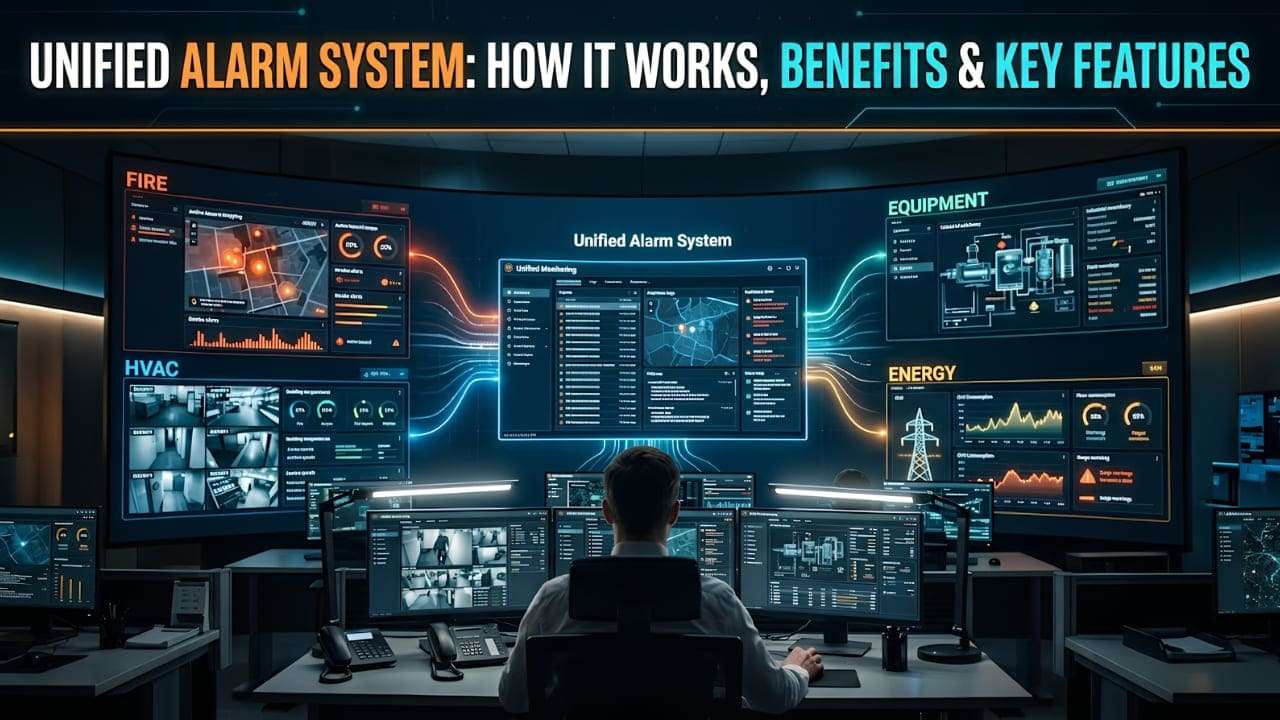
Modern facilities can receive alarms from fire, HVAC, security, equipment, and energy systems. When these alerts are scattered across different interfaces, operators may struggle to identify which events require attention first. ISA guidance uses about 6 alarms per hour per operator console as an average target and about 12 alarms per hour as the maximum manageable average. A Unified Alarm System can bring relevant alarm information into a common monitoring environment, helping teams:
- Centralize alarm visibility
- Prioritize important events
- Track alarm history
- Support informed operator response
IEC 62682 also recognizes alarm/event logs and performance metrics as important parts of alarm systems.
What Is a Unified Alarm System?
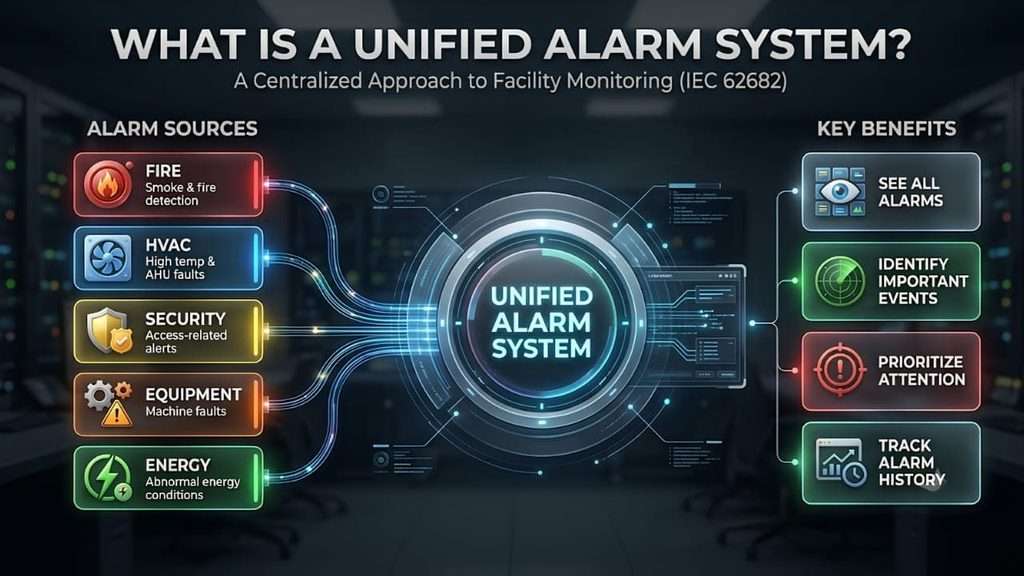
A Unified Alarm System brings alarm information from multiple systems into a common monitoring environment. Instead of checking separate interfaces for fire, HVAC, security, equipment, or energy alerts, operators can view relevant events through a centralized approach. IEC 62682 recognizes alarm systems that communicate abnormal conditions to operators and maintain alarm/event logs, historians, and performance metrics.
For example, a facility may receive:
| Alarm Source | Example |
| Fire | Smoke or fire detection |
| HVAC | High temperature or AHU fault |
| Security | Access-related alert |
| Equipment | Machine fault |
| Energy | Abnormal energy condition |
A unified approach helps teams:
- See alarms from different sources
- Identify important events
- Prioritize operator attention
- Track alarm history
How Does a Unified Alarm System Work?
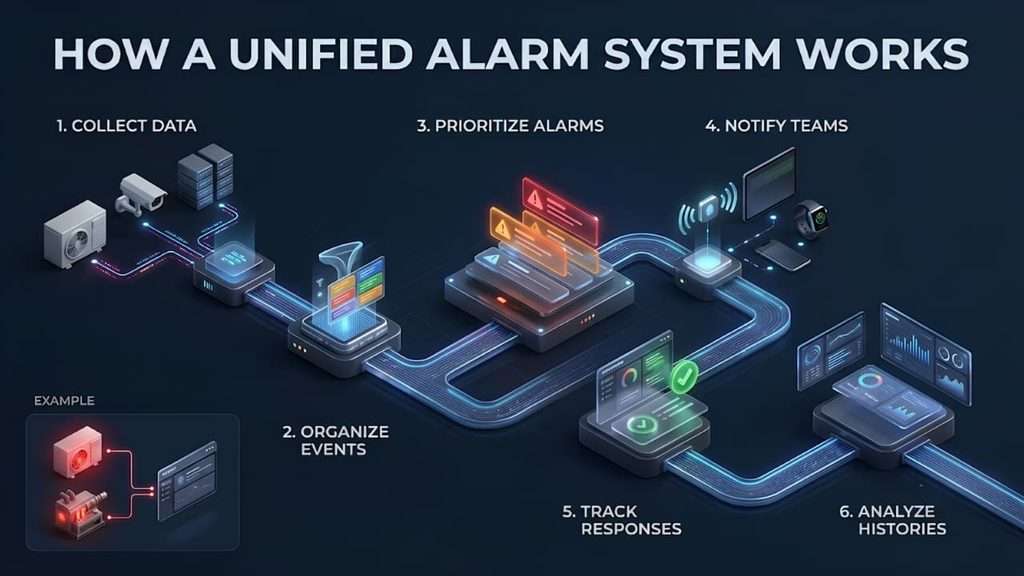
A unified alarm system collects, organizes, prioritizes, and tracks alarm information from connected systems. The exact workflow depends on the facility’s architecture, communication protocols, and integration requirements.
The process typically follows these steps:
- 1. Collect alarm data: Gather relevant alarm events from connected systems through compatible interfaces.
- 2. Organize events: Categorize alarms by source, condition, status, and priority.
- 3. Prioritize important alarms: Highlight critical events so operators can focus on conditions that require action.
- 4. Notify the right people: Send configured alerts to the appropriate operators or teams.
- 5. Track responses: Record acknowledgements, alarm status, and event history.
- 6. Analyze events: Use historical data to identify recurring or frequent alarm conditions.
Example: If an HVAC unit reports a high-temperature condition while an equipment fault occurs, the operator can view both events in the same monitoring environment and address the higher-priority condition first.
What Types of Alarms Can Be Unified?
A unified approach can bring alarm information from multiple building and industrial systems into a common monitoring environment. The exact integrations depend on the facility’s systems, interfaces, and architecture, but common alarm categories include:
- Fire alarms: Smoke detection, fire events, and related safety alerts.
- HVAC alarms: High temperature, equipment faults, pressure issues, or AHU conditions.
- Security alarms: Access-related events, unauthorized entry alerts, and security equipment conditions.
- Equipment alarms: Machine faults, abnormal operating conditions, or equipment status changes.
- Energy system alarms: Abnormal power conditions, energy-related events, or unusual equipment consumption.
Example: Imagine a manufacturing facility where an AHU reports a temperature problem while a production machine generates a fault alert. Instead of checking separate screens, an operator can view both events through a common monitoring environment, identify their priorities, and follow the appropriate response procedure.
Why Is a Unified Alarm System Important?
Managing alarms becomes challenging when operators need to monitor several systems at the same time. A unified approach brings relevant alarm information into a more connected view, helping teams understand what needs attention without constantly switching between different interfaces.
Key benefits include:
- Centralized visibility: View relevant alarms through one monitoring environment.
- Better prioritization: Identify events that require immediate attention.
- Improved awareness: Understand important conditions across the facility.
- Easier tracking: Review alarm history and recurring events.
- Consistent response: Follow defined procedures for different alarm conditions.
- Better decision-making: Use organized alarm information to support operational decisions.
Example: If an equipment fault and HVAC temperature alarm occur at the same time, operators can review both events together, assess their priority, and follow the appropriate response procedure.
Key Features to Look for in a Unified Alarm System
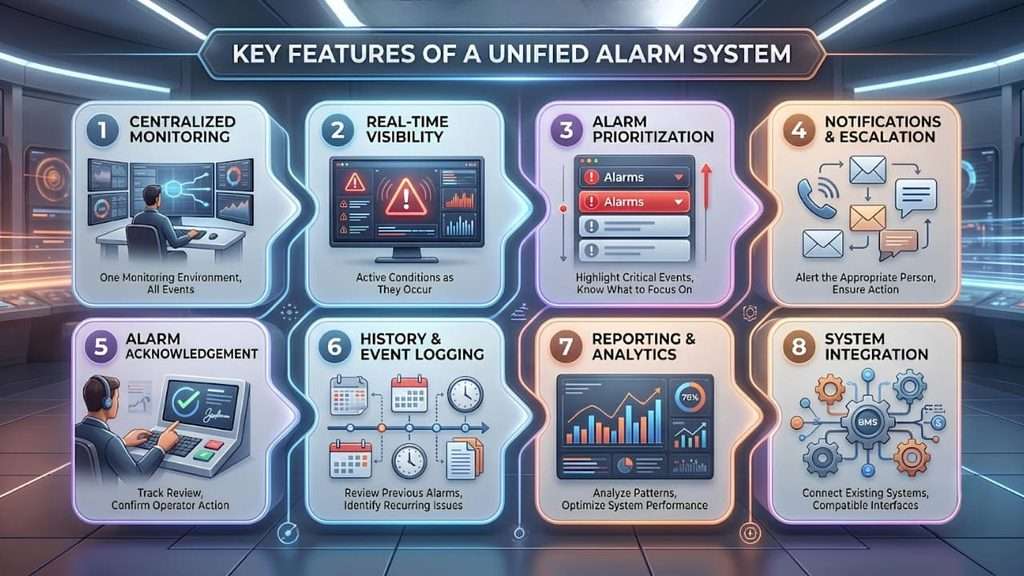
When evaluating a unified alarm solution, focus on features that help operators see, understand, prioritize, and respond to alarms without creating unnecessary complexity.
Key features include:
- Centralized monitoring: View relevant alarm events through one monitoring environment.
- Real-time visibility: See active alarm conditions as they occur.
- Alarm prioritization: Highlight critical events so operators know what needs attention first.
- Notifications and escalation: Alert the appropriate person when an important event requires action.
- Alarm acknowledgement: Track whether an operator has reviewed an event.
- History and event logging: Review previous alarms to identify recurring issues.
- Reporting and analytics: Analyze alarm patterns and system performance.
- System integration: Connect with existing BMS, equipment, and monitoring platforms through compatible interfaces.
Unified Alarm System vs. Centralized Alarm System
Unified Alarm System and Centralized Alarm System sound similar, but they focus on slightly different ideas. A unified approach brings alarm information from different systems into a common monitoring environment, while a centralized approach focuses on managing alarms from one location or interface.
| Aspect | Unified Alarm System | Centralized Alarm System |
| Main focus | Integrates different alarm sources | Manages alarms from one location |
| Typical sources | Fire, HVAC, security, equipment, energy | One or multiple connected systems |
| Key benefit | One connected operational view | Easier centralized monitoring |
For example, a manufacturing facility may receive a fire alarm, HVAC fault, machine alarm, and energy alert. A unified approach can bring these events together, while centralized monitoring gives operators one place to review them.
Key points:
- Unified focuses on integration and visibility.
- Centralized focuses on location and control.
- Both can support better alarm prioritization and response.
- The right approach depends on system architecture and integration requirements.
Unified Alarm System vs. Alarm Management System
A unified alarm system focuses on bringing relevant alarm information from different sources into a common monitoring environment. An alarm management system goes further by helping organizations control how those alarms are prioritized, acknowledged, monitored, and reviewed.
| Aspect | Unified Alarm System | Alarm Management System |
| Main focus | Connect and view alarm information | Manage alarm performance and response |
| Primary purpose | Improve visibility | Improve alarm handling |
| Typical functions | Integration and monitoring | Prioritization, acknowledgement, analysis |
| Main benefit | Connected operational view | Structured alarm management |
Example: A facility may use a unified monitoring environment to bring HVAC and equipment alarms together, while alarm-management practices help operators decide which events require immediate attention and how teams should respond.
Alarm Management Best Practices for a Unified Environment
Managing alarms effectively requires more than collecting alerts on one screen. Teams need clear rules that help operators identify important events and respond consistently.
Best practices to follow:
- Define an alarm philosophy: Set clear rules for what qualifies as an alarm and how teams should handle it.
- Prioritize alarms: Classify events as critical, high, medium, or low based on their potential impact.
- Rationalize unnecessary alarms: Remove duplicate, irrelevant, or nuisance alerts that distract operators.
- Set clear notifications: Send each alert to the appropriate person or team.
- Track acknowledgements: Record when operators review and respond to important alarms.
- Review alarm history: Analyze recurring alarms to identify underlying equipment or process issues.
- Monitor alarm performance: Track alarm frequency and response patterns over time.
Example: If a facility receives repeated HVAC temperature alarms every few minutes, the team should investigate the underlying condition instead of simply acknowledging each alert. A structured approach keeps the unified environment useful and helps operators focus on alarms that genuinely require attention.
Challenges of Managing Multiple Alarm Systems Without a Unified Approach
Managing separate alarm systems can make everyday monitoring more complicated. When fire, HVAC, security, equipment, and energy systems use different interfaces, operators may need to check several screens before they understand what is happening.
Common challenges include:
- Multiple interfaces: Operators switch between different dashboards to check alarms.
- Alert overload: Frequent or duplicate notifications can make important events harder to notice.
- Poor prioritization: Different systems may use different priority levels, making critical alarms difficult to identify quickly.
- Limited visibility: Teams may struggle to understand related events across systems.
- Difficult tracking: Separate alarm histories can make it harder to identify recurring problems.
- Inconsistent response: Different teams may follow different procedures for similar events.
Example: Imagine a factory where an HVAC temperature alarm appears on one dashboard while a machine fault appears on another. An operator must check both systems to understand whether the events relate to each other. A unified monitoring approach can bring these events into one operational view, making it easier to compare, prioritize, and respond to relevant alarms.
How to Implement a Unified Alarm System
Implementing a unified alarm environment starts with understanding how your existing systems generate and handle alerts. You do not need to replace every system. Instead, connect relevant alarm sources through compatible interfaces and create a structured monitoring process.
Key steps:
- Identify alarm sources: List fire, HVAC, security, equipment, and energy systems that need monitoring.
- Review system compatibility: Check available protocols, APIs, gateways, and communication interfaces.
- Define alarm priorities: Classify alarms according to severity, operational impact, and required response.
- Create a common monitoring view: Bring relevant events into one dashboard or monitoring environment.
- Configure notifications: Route critical alerts to the appropriate operators or teams.
- Set response procedures: Define who should acknowledge, investigate, and escalate each alarm.
- Test and improve: Review alarm history and operator feedback to remove unnecessary or duplicate alerts.
Example: A manufacturing plant can connect machine faults, HVAC temperature alerts, and energy abnormalities to one monitoring environment. Operators can then see related events together, prioritize them, and follow the appropriate response procedure.
Applications of Unified Alarm Systems
Unified alarm systems can support different environments where teams need to monitor alerts from multiple systems. Instead of managing each alarm source separately, organizations can bring relevant events into a common monitoring environment.
Common applications include:
- Manufacturing plants: Monitor machine faults, HVAC conditions, energy alerts, and safety-related events from one operational view.
- Commercial buildings: Combine fire, HVAC, security, and building-management alerts to improve facility monitoring.
- Data centers: Track cooling issues, equipment faults, power-related alerts, and environmental conditions.
- Hospitals: Monitor critical facility systems such as HVAC, fire safety, power, and equipment-related alerts.
- Warehouses and cold storage: Track temperature, humidity, refrigeration, security, and energy-related conditions.
- Energy facilities: Monitor equipment conditions, power abnormalities, and energy-system alerts.
Example: A cold-storage facility may receive a high-temperature alert, refrigeration fault, and power abnormality at the same time. A unified monitoring environment can bring these events together, helping operators understand the situation, prioritize the most important condition, and follow the appropriate response procedure.
Unified Alarm System for Smarter Building and Industrial Operations
Connected buildings and industrial facilities generate large amounts of operational information from different systems. The challenge is not simply receiving more alerts; it is turning those alerts into useful information for everyday decisions. A unified monitoring approach can help teams create a clearer operational picture and understand which events need attention.
It can help teams:
- Improve operational awareness: Understand important events across different systems.
- Support faster decision-making: Give operators organized information when conditions change.
- Identify recurring issues: Use historical alarm data to spot patterns that need attention.
- Support scalable operations: Adapt monitoring as facilities add new equipment or connected systems.
- Improve coordination: Give relevant teams a common view of important events.
Example: A facility manager reviewing recurring equipment and energy alerts can use historical information to identify patterns, investigate potential issues, and coordinate corrective action with the relevant team.
One facility. Multiple alarm sources. One clearer view.
Discover how Niraltek helps organizations unify alarm monitoring, prioritize important events, and improve operational visibility.
Conclusion
Managing alarms from multiple systems can become complicated when teams rely on separate dashboards and disconnected alerts. A Unified Alarm System brings relevant fire, HVAC, security, equipment, and energy alarms into a more connected monitoring environment.
This approach gives operators better visibility, helps prioritize important events, and supports a more consistent response. For modern buildings and industrial facilities, unified alarm management can simplify monitoring while improving operational awareness. As facilities become more connected, bringing alarm information together becomes increasingly valuable. The right solution can help organizations move from scattered alerts to smarter, more organized alarm monitoring.
Frequently Asked Questions
1. What is a unified alarm system?
A unified alarm system brings alerts from different systems, such as fire, HVAC, security, equipment, and energy, into a common monitoring environment. It helps operators view, organize, prioritize, and respond to relevant events more efficiently.
2. What is the difference between a unified and centralized alarm system?
A unified approach focuses on bringing information from different alarm sources together, while a centralized system focuses on managing those alarms from one location or interface. In many facilities, both approaches can work together.
3. What types of alarms can be monitored?
Depending on the facility and available integrations, teams can monitor fire alarms, HVAC alerts, security events, equipment faults, energy abnormalities, and other system-generated notifications through a common monitoring environment.
4. How does unified alarm management help operators?
It gives operators a clearer view of active events, helps them identify important alarms, reduces the need to switch between multiple interfaces, and supports consistent response procedures.
5. Can a unified alarm system integrate with existing systems?
Yes, integration can connect existing systems through compatible protocols, APIs, gateways, or other interfaces. The exact possibilities depend on the facility’s architecture and the systems already in use.
6. Why is alarm prioritization important?
Not every alarm requires the same level of attention. Prioritization helps operators identify critical events and respond according to their severity, operational impact, and required action.
7. Can unified alarm management reduce alarm overload?
It can help organizations identify duplicate, unnecessary, or low-value alerts and organize alarms more effectively. However, teams still need proper alarm rationalization and management practices to control alarm overload.
8. Where can unified alarm monitoring be used?
It can support manufacturing plants, commercial buildings, data centers, hospitals, warehouses, cold-storage facilities, and other environments where multiple systems generate operational alerts.
9. What is the difference between unified alarm management and alarm monitoring?
Alarm monitoring focuses on receiving and viewing alarm events, while unified alarm management takes a broader approach by organizing, prioritizing, acknowledging, tracking, and reviewing alarms across connected systems.